
Belgium Best Day Trips & Activities. Explore Fairytale Cities & Chocolate Tours
Fairy-tale cities, world-class chocolate & extraordinary beer culture
Medieval Magic & Artisan Pleasures
TravelWell Guide
Belgium Best Day Trips & Activities. Explore Fairytale Cities & Chocolate Tours
Fairy-tale cities, world-class chocolate & extraordinary beer culture
Medieval Magic & Artisan Pleasures
TravelWell Guide
Why Travelers Love It
Belgium is one of Europe's most underestimated destinations, and those who've been will tell you it shouldn't be. Bruges is arguably the best-preserved medieval city in northern Europe: a maze of cobbled lanes, Gothic guild halls, and mirror-still canals that make you feel like you've stepped inside a Flemish painting. Brussels is its confident, cosmopolitan counterpart, home to one of Europe's grandest squares, the Grand Place, and a street food culture built around waffles, frites, and moules that punches well above its weight. Then there's the beer. Belgium produces over 1,500 distinct beers, from complex Trappist ales brewed by monks to wild-fermented lambics that taste unlike anything else. And the chocolate, not a cliché, but a genuine craft tradition carried by master chocolatiers who've been perfecting pralines for generations. Belgium is small, easy to navigate, and full of things that will genuinely surprise you.

🏰 Medieval Cities 🍫 Fine Chocolate
🍺 Trappist Beer 🎨 Flemish Art
Why Travelers Keep Coming Back to Belgium
Belgium is beloved by the travelers who discover it. The medieval Flemish cities - Bruges, Ghent, and Antwerp - are among Europe's most beautiful and least overrun. The food and drink culture is extraordinary: Belgian chocolate is the world benchmark, Belgian beer culture is a UNESCO Intangible Cultural Heritage, and the French-influenced cuisine in Brussels and Wallonia is seriously good. And the country's art history - from the Flemish Primitives to Surrealism (Rene Magritte was Belgian) - is extraordinary.
Best Time to Visit Belgium
Spring (April - June)
is ideal - mild temperatures, the Flanders countryside in bloom, and beer festival season beginning. The Ghent Floralien flower festival runs every five years (next 2030).
Summer (July - August)
is warm and lively - Brussels' art nouveau architecture and outdoor terrace culture are at their best. The Belgian coast (Oostende, Knokke) is surprisingly pleasant.
Autumn (September -October)
brings rich light, quieter cities, and the harvest season in the beer and wine regions of Wallonia.
Winter (November,December)
is when Belgium shines - Christmas markets in Brussels, Bruges, and Ghent are among Europe's finest, gluhwein in hand, medieval squares lit by fairy lights.
Why Travelers Love It
Belgium is one of Europe's most underestimated destinations, and those who've been will tell you it shouldn't be. Bruges is arguably the best-preserved medieval city in northern Europe: a maze of cobbled lanes, Gothic guild halls, and mirror-still canals that make you feel like you've stepped inside a Flemish painting. Brussels is its confident, cosmopolitan counterpart, home to one of Europe's grandest squares, the Grand Place, and a street food culture built around waffles, frites, and moules that punches well above its weight. Then there's the beer. Belgium produces over 1,500 distinct beers, from complex Trappist ales brewed by monks to wild-fermented lambics that taste unlike anything else. And the chocolate, not a cliché, but a genuine craft tradition carried by master chocolatiers who've been perfecting pralines for generations. Belgium is small, easy to navigate, and full of things that will genuinely surprise you.
🏰 Medieval Cities 🍫 Fine Chocolate
🍺 Trappist Beer 🎨 Flemish Art
Why Travelers Keep Coming Back to Belgium
Belgium is beloved by the travelers who discover it. The medieval Flemish cities - Bruges, Ghent, and Antwerp - are among Europe's most beautiful and least overrun. The food and drink culture is extraordinary: Belgian chocolate is the world benchmark, Belgian beer culture is a UNESCO Intangible Cultural Heritage, and the French-influenced cuisine in Brussels and Wallonia is seriously good. And the country's art history - from the Flemish Primitives to Surrealism (Rene Magritte was Belgian) - is extraordinary.
Best Time to Visit Belgium
Spring (April - June)
is ideal - mild temperatures, the Flanders countryside in bloom, and beer festival season beginning. The Ghent Floralien flower festival runs every five years (next 2030).
Summer (July - August)
is warm and lively - Brussels' art nouveau architecture and outdoor terrace culture are at their best. The Belgian coast (Oostende, Knokke) is surprisingly pleasant.
Autumn (September -October)
brings rich light, quieter cities, and the harvest season in the beer and wine regions of Wallonia.
Winter (November,December)
is when Belgium shines - Christmas markets in Brussels, Bruges, and Ghent are among Europe's finest, gluhwein in hand, medieval squares lit by fairy lights.
Explore by City


Brussels dazzles with politics and gastronomy. Bruges enchants with medieval perfection. Ghent strikes the balance between both. Antwerp leads with fashion and diamonds. Liège pulses with Walloon soul. Five cities, each completely distinct.
Getting Around Portugal
Belgium is tiny and the rail network is comprehensive. Brussels to Bruges takes 1 hour, Brussels to Ghent 30 minutes, Brussels to Antwerp 40 minutes. Day trips to all major Flemish cities are entirely practical from a Brussels base. Trains run frequently and are punctual.
Top Regions & What to See
Brussels
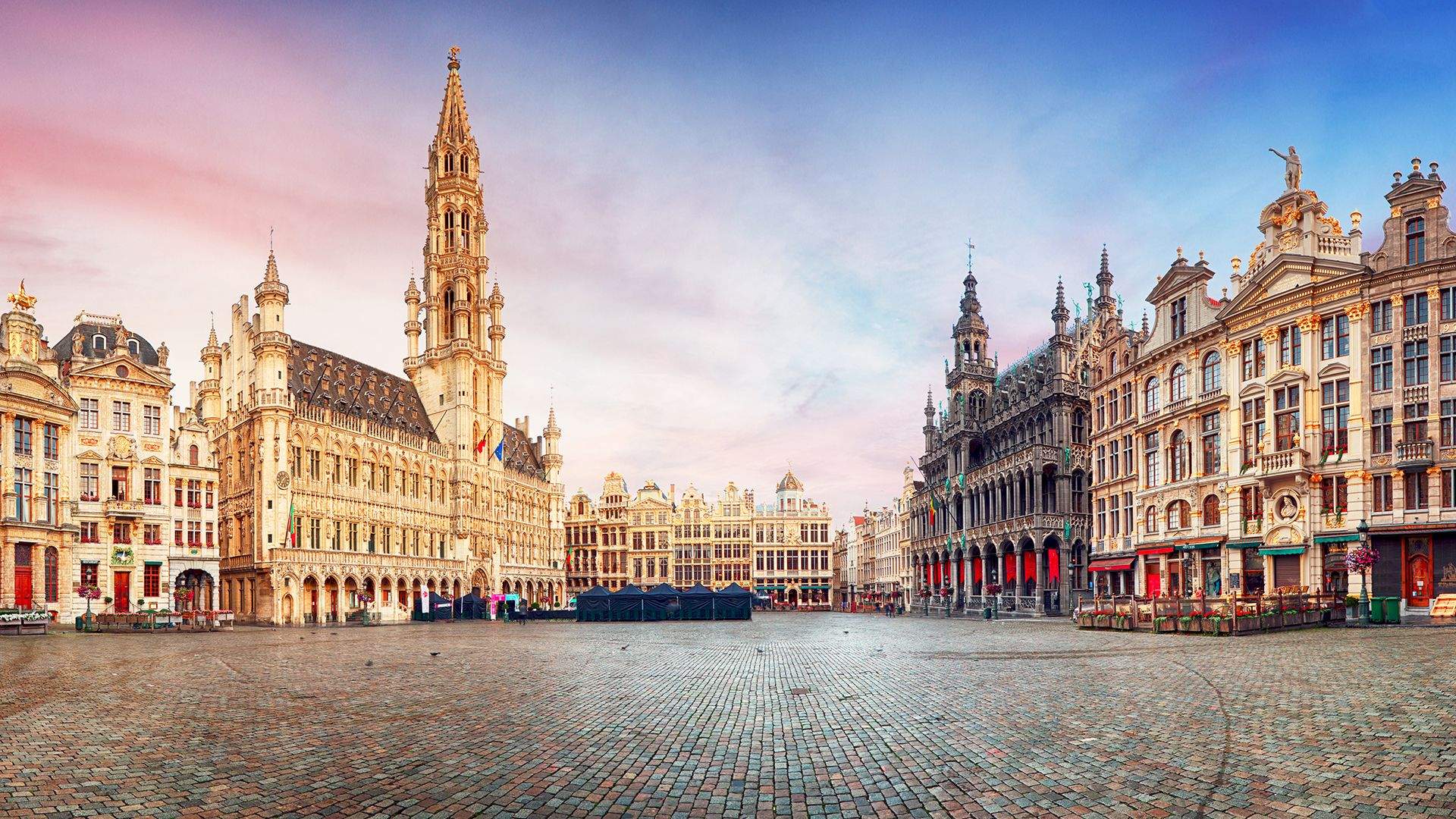
The Belgian capital is more interesting than its EU-capital reputation suggests. The Grand-Place is one of Europe's most spectacular market squares - gold-gilded Gothic guildhalls surrounding a central space that has been gathering people since the 14th century. The Art Nouveau architecture (Brussels has more Art Nouveau buildings than any other city in the world), the Magritte Museum, the Atomium, and the utterly unique comic strip culture (Tintin, the Smurfs, and Lucky Luke are all Belgian) make Brussels a genuinely fascinating city.
Bruges
Bruges is medieval Belgium preserved almost perfectly - a canal city of stepped-gable houses, belfry towers, and cobbled streets that look almost unchanged from 15th-century Flemish paintings. It's understandably popular, but arriving early (before 9am) or staying overnight reveals a quieter, more atmospheric side. The Groeningemuseum holds one of the world's finest collections of Flemish Primitive paintings.
Ghent
Ghent is the city Bruges travelers often like better once they discover it - bigger, more lived-in, and with a student energy that gives it a contemporary edge. The view from Sint-Michielsbrug bridge, taking in the three towers of St. Bavo's Cathedral, St. Nicholas' Church, and the Belfry simultaneously, is one of Belgium's great sights. And St. Bavo's houses the Van Eyck brothers' Ghent Altarpiece - arguably the most important painting in the history of Western art.
Antwerp
Antwerp is Belgium's most cosmopolitan city - a diamond capital, fashion hub, and port city with a serious art pedigree (Rubens lived and worked here). The Cathedral of Our Lady houses four Rubens masterpieces. The fashion district around the Nationalestraat is world-class. And the food and bar scene along the Schelde river is excellent.
Wallonia & the Ardennes
Southern Belgium is entirely different in character - French-speaking, forested, and dotted with medieval castles perched above river valleys. The Ardennes region is excellent for hiking, cycling, and kayaking. The town of Dinant (birthplace of Adolphe Sax, inventor of the saxophone) sits dramatically below a clifftop citadel on the Meuse river.
Explore by City

Brussels dazzles with politics and gastronomy. Bruges enchants with medieval perfection. Ghent strikes the balance between both. Antwerp leads with fashion and diamonds. Liège pulses with Walloon soul. Five cities, each completely distinct.
Getting Around Portugal
Belgium is tiny and the rail network is comprehensive. Brussels to Bruges takes 1 hour, Brussels to Ghent 30 minutes, Brussels to Antwerp 40 minutes. Day trips to all major Flemish cities are entirely practical from a Brussels base. Trains run frequently and are punctual.
Top Regions & What to See
Brussels
The Belgian capital is more interesting than its EU-capital reputation suggests. The Grand-Place is one of Europe's most spectacular market squares - gold-gilded Gothic guildhalls surrounding a central space that has been gathering people since the 14th century. The Art Nouveau architecture (Brussels has more Art Nouveau buildings than any other city in the world), the Magritte Museum, the Atomium, and the utterly unique comic strip culture (Tintin, the Smurfs, and Lucky Luke are all Belgian) make Brussels a genuinely fascinating city.
Bruges
Bruges is medieval Belgium preserved almost perfectly - a canal city of stepped-gable houses, belfry towers, and cobbled streets that look almost unchanged from 15th-century Flemish paintings. It's understandably popular, but arriving early (before 9am) or staying overnight reveals a quieter, more atmospheric side. The Groeningemuseum holds one of the world's finest collections of Flemish Primitive paintings.
Ghent
Ghent is the city Bruges travelers often like better once they discover it - bigger, more lived-in, and with a student energy that gives it a contemporary edge. The view from Sint-Michielsbrug bridge, taking in the three towers of St. Bavo's Cathedral, St. Nicholas' Church, and the Belfry simultaneously, is one of Belgium's great sights. And St. Bavo's houses the Van Eyck brothers' Ghent Altarpiece - arguably the most important painting in the history of Western art.
Antwerp
Antwerp is Belgium's most cosmopolitan city - a diamond capital, fashion hub, and port city with a serious art pedigree (Rubens lived and worked here). The Cathedral of Our Lady houses four Rubens masterpieces. The fashion district around the Nationalestraat is world-class. And the food and bar scene along the Schelde river is excellent.
Wallonia & the Ardennes
Southern Belgium is entirely different in character - French-speaking, forested, and dotted with medieval castles perched above river valleys. The Ardennes region is excellent for hiking, cycling, and kayaking. The town of Dinant (birthplace of Adolphe Sax, inventor of the saxophone) sits dramatically below a clifftop citadel on the Meuse river.
Don't Miss
Bruges: The Whole City
Victor Hugo called it the most beautiful square in the world, and it's hard to argue. The Grand Place is ringed by elaborately gilded Gothic and Baroque guild houses, each competing to be more ornate than the last. It's magnificent by day and utterly theatrical at night when floodlit.
Brussels Grand Place
The Chocolate Trail
Bruges isn't a destination with a highlight reel, it IS the highlight. Every street, every canal bend, every belfry view is worth pausing for. Climb the 366 steps of the Belfry for rooftop views over the medieval skyline, then descend into a canal-side café for the first of many Belgian beers.
While Amsterdam looks to its past, Rotterdam, rebuilt entirely after WWII, looks boldly forward. The Cube Houses, the Markthal food hall, and the Erasmus Bridge make it one of Europe's most architecturally adventurous cities. A stunning contrast to its neighbours.
Belgium Day Trips & Activities
Belgium is one of Europe's most quietly rewarding destinations - a small country with an outsized cultural identity, world-class cities, and a culinary culture that punches well above its weight. It's the kind of place that surprises travelers who arrive with modest expectations and leave planning a return trip.
The country splits roughly into Dutch-speaking Flanders in the north and French-speaking Wallonia in the south, with bilingual Brussels in the middle. Each region has its own character, cuisine, and identity - which means Belgium offers genuine variety within a compact geography. You can be in the Flemish medieval city of Bruges in the morning and the beer-brewing valleys of Wallonia in the afternoon.
Don't Miss
Bruges: The Whole City
Victor Hugo called it the most beautiful square in the world, and it's hard to argue. The Grand Place is ringed by elaborately gilded Gothic and Baroque guild houses, each competing to be more ornate than the last. It's magnificent by day and utterly theatrical at night when floodlit.
Brussels Grand Place
The Chocolate Trail
Bruges isn't a destination with a highlight reel, it IS the highlight. Every street, every canal bend, every belfry view is worth pausing for. Climb the 366 steps of the Belfry for rooftop views over the medieval skyline, then descend into a canal-side café for the first of many Belgian beers.
While Amsterdam looks to its past, Rotterdam, rebuilt entirely after WWII, looks boldly forward. The Cube Houses, the Markthal food hall, and the Erasmus Bridge make it one of Europe's most architecturally adventurous cities. A stunning contrast to its neighbours.
Belgium Day Trips & Activities
Belgium is one of Europe's most quietly rewarding destinations - a small country with an outsized cultural identity, world-class cities, and a culinary culture that punches well above its weight. It's the kind of place that surprises travelers who arrive with modest expectations and leave planning a return trip.
The country splits roughly into Dutch-speaking Flanders in the north and French-speaking Wallonia in the south, with bilingual Brussels in the middle. Each region has its own character, cuisine, and identity - which means Belgium offers genuine variety within a compact geography. You can be in the Flemish medieval city of Bruges in the morning and the beer-brewing valleys of Wallonia in the afternoon.
Top Reasons to Visit
✔ Medieval architecture in extraordinary concentration, Bruges and Ghent offer streetscapes found nowhere else in Europe
✔ The world's greatest beer and chocolate traditions existing side by side in the same small country
✔ Three distinct regions, Flanders, Wallonia, and Brussels, each with their own language, culture, and identity
✔ Compact and effortlessly connected, Bruges to Brussels takes under an hour; you can see the whole country in a long weekend and want to come back for more
✔ Brussels: moules-frites (mussels and fries - the Belgian national dish), carbonnade flamande (beef braised in beer), waterzooi (cream-based chicken or fish stew), gaufres de Bruxelles (light, crisp Brussels waffles)
✔ Bruges & Ghent: stoemp (mashed potato with vegetables), hochepot (Flemish stew), and the city's own local ales on draught
✔ Antwerp: the Elzenveld and Het Zuid neighborhoods for serious contemporary dining
✔ Beer culture: start with a Trappist ale (Westvleteren 12 is considered the world's best beer), explore lambics and gueuzes in Brussels, and don't leave without trying a proper abbey beer in context - ideally beside the abbey that brews it
✔ Chocolate: Neuhaus, Godiva, Pierre Marcolini, and Leonidas are the famous names, but the best are the small artisan chocolatiers found in every city neighborhood
What to Eat & Drink
Top Reasons to Visit
✔ Medieval architecture in extraordinary concentration, Bruges and Ghent offer streetscapes found nowhere else in Europe
✔ The world's greatest beer and chocolate traditions existing side by side in the same small country
✔ Three distinct regions, Flanders, Wallonia, and Brussels, each with their own language, culture, and identity
✔ Compact and effortlessly connected, Bruges to Brussels takes under an hour; you can see the whole country in a long weekend and want to come back for more