
Japan Best Day Trips & Activities. Discover the Heart of the Rising Sun
Cherry blossoms, zen temples & a depth of culture that rewards every visit
Ancient Traditions & Modern Wonder
TravelWell Guide
Why Travelers Love It
Japan operates by its own rules, and that's precisely why it's one of the most compelling destinations on earth. It's a country of extraordinary contrasts, held in perfect balance: ancient Zen temples and rocket-speed bullet trains; meditative tea ceremonies and 24-hour neon-lit convenience stores stocked with food that would make a French chef weep with admiration; silent mountain shrines and the controlled chaos of Tokyo's Shibuya Crossing, the world's busiest pedestrian junction, where up to 3,000 people cross simultaneously every two minutes. Kyoto distils old Japan to its purest form, geisha districts, bamboo groves, 1,600 Buddhist temples, and a reverence for craft and aesthetics that permeates daily life. Cherry blossom season (late March to early May) transforms the entire country into something almost impossibly beautiful, a two-week window when Japan's parks, riverbanks, and temple grounds turn a soft, unanimous pink. And the food, not just sushi and ramen, but kaiseki multi-course haute cuisine, izakaya pub culture, Osaka's street takoyaki, and Kyoto's precision bento boxes, is one of the world's deepest and most rewarding culinary traditions.

🌸 Cherry Blossoms ⛩ Zen Temples
🍣 World-class Cuisine 🚄 Bullet Train
Why Travelers Keep Coming Back to Japan
Japan rewards the curious. On the surface, it's temples, cherry blossoms, sushi, and Mount Fuji. Dig slightly deeper and you find neighbourhood shotengai shopping streets, rural onsen towns with one inn and one public bath, standing ramen bars so good they've earned Michelin stars, and a concept of hospitality (omotenashi) that genuinely changes how you think about being welcomed somewhere.
Best Time to Visit Japan
Spring (late March - April)
is cherry blossom season - Japan's most famous and most crowded period. Book accommodation months in advance. Worth every bit of effort.
Autumn (October - November)
is spectacular in Kyoto, Nikko, and across the Alps. Temperatures are perfect and crowds are more manageable than spring.
Summer (June - August)
is hot and humid, particularly in Tokyo and Osaka. But this is also matsuri (festival) season - some of Japan's most dramatic events happen in summer.
Winter (December - February)
brings snow to the mountains (world-class skiing in Hokkaido and the Japanese Alps) and quiet, photogenic scenes at Kyoto's temples. Fewer tourists, lower prices.
Explore by City


Tokyo for the full force of 21st-century Japan. Kyoto for ancient beauty and cultural depth. Osaka for food, comedy, and a personality all its own. Hiroshima for history, resilience, and the Peace Memorial Park. Nara for sacred deer roaming freely between thousand-year-old temples.
Getting Around Japan
The Japan Rail Pass (purchased before arrival) gives unlimited travel on most JR trains including the shinkansen (bullet trains) for a set period. It's excellent value for multi-city trips. IC cards (Suica, Pasmo) handle local trains, subways, and even convenience store purchases. Google Maps works brilliantly for navigation.
Top Regions & What to See
Tokyo
Tokyo is vast, layered, and endlessly interesting. Spend time across its distinct neighbourhoods: Shibuya and Shinjuku for energy and nightlife, Yanaka and Nezu for traditional atmosphere, Akihabara for tech and anime culture, and Ginza for luxury. Day trips from Tokyo include Nikko (ornate shrines and mountain scenery), Kamakura (giant Buddha, coastal temples), and the Hakone / Mt. Fuji region.
Kyoto
Japan's cultural heart. Kyoto has 17 UNESCO World Heritage sites, including Fushimi Inari's famous torii gate trails, the Kinkaku-ji golden pavilion, and the preserved geisha district of Gion. The quieter temples - Ryoan-ji, Nanzen-ji, Daitoku-ji - reward those who rise early.
Osaka
Japan's most exuberant city. Osaka is louder, cheaper, and more fun than Tokyo in a different way - famous for its street food (takoyaki, okonomiyaki), its nightlife district Dotonbori, and its role as a gateway to Kyoto, Nara, and Kobe.Hiroshima & Miyajima
One of Japan's most powerful and moving destinations. The Peace Memorial Park is essential. Miyajima Island - with its floating torii gate and wild deer - is a short ferry ride away and deeply beautiful.
Hokkaido
Japan's great northern frontier. Famous for skiing (Niseko), lavender fields (Furano in summer), fresh seafood, and wide open landscapes that feel completely unlike the rest of the country.
Don't Miss
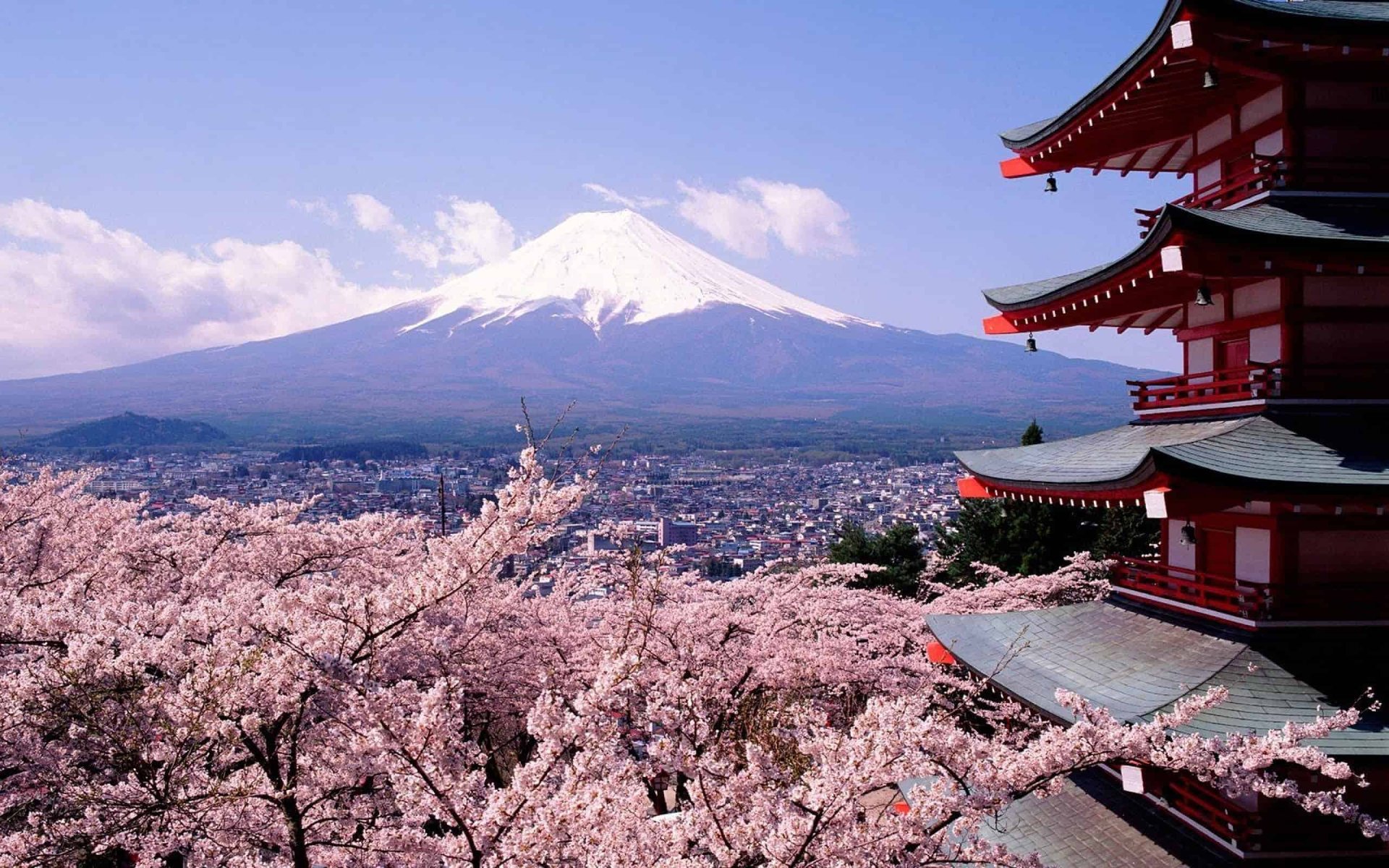
Cherry Blossom Season
Ten thousand vermillion torii gates wind their way up the forested slopes of Inari Mountain in southern Kyoto, creating one of Japan's most iconic and atmospheric corridors. The full hike to the summit takes two to three hours; the early-morning crowds are thin and the light through the gates is extraordinary. This is Japan at its most mystical.
Fushimi Inari Shrine, Kyoto
The Shinkansen Bullet Train Network
Sakura season is one of the world's great annual natural events, and the Japanese treat it with reverence and joy in equal measure. Hanami (flower viewing) picnics beneath blooming trees fill parks across the country. The best spots, Maruyama Park in Kyoto, Ueno Park in Tokyo, Hirosaki Castle in Aomori, require planning a year ahead to secure accommodation. It is completely worth it.
Japan's bullet train network is one of the engineering and operational wonders of the modern world, over 60 years of zero passenger fatalities, average delays of under a minute, and speeds of up to 320km/h. Riding the Shinkansen between Tokyo and Kyoto (just over two hours) with Mount Fuji framed perfectly in the window on a clear day is a travel experience that never loses its thrill.
Japan Day Trips & Activities
Japan is unlike anywhere else on earth. It's a country where ancient temples sit quietly beside bullet train stations, where precision and beauty are applied to everything from garden design to the folding of a paper bag, and where every region has its own dialect, cuisine, and identity. First-time visitors are often overwhelmed - in the best possible way. Those who return find new layers every time.
The infrastructure alone is remarkable. Japan's rail network is so punctual and comprehensive that it genuinely opens up the country to independent travelers. You can be in Kyoto's bamboo groves in the morning and Tokyo's neon-lit back alleys by evening. Day trips here are not just convenient - they're a genuine part of how the country is meant to be explored.
Top Reasons to Visit
✔ The most precise, respectful, and safe travel experience on earth, Japan's standards of service, cleanliness, and hospitality are simply unmatched
✔ A food culture of extraordinary depth, from a ¥500 ramen bowl to a ¥50,000 kaiseki dinner, Japan takes every meal seriously
✔ Cherry blossom season, a two-week window of heartbreaking beauty that draws visitors from every corner of the world, every single year
✔ Ancient and ultramodern coexisting in a way found nowhere else, nowhere else on earth can you exit a 1,200- year-old temple and be in a robot restaurant 20 minutes later