
Croatia Best Day Trips & Activities. Explore Island Hopping
Island-hopping, crystal waters & a coastline unlike any other
Ancient Walls & Adriatic Splendour
TravelWell Guide
Croatia Best Day Trips & Activities. Explore Island Hopping
Island-hopping, crystal waters & a coastline unlike any other
Ancient Walls & Adriatic Splendour
TravelWell Guide
Why Travelers Love It
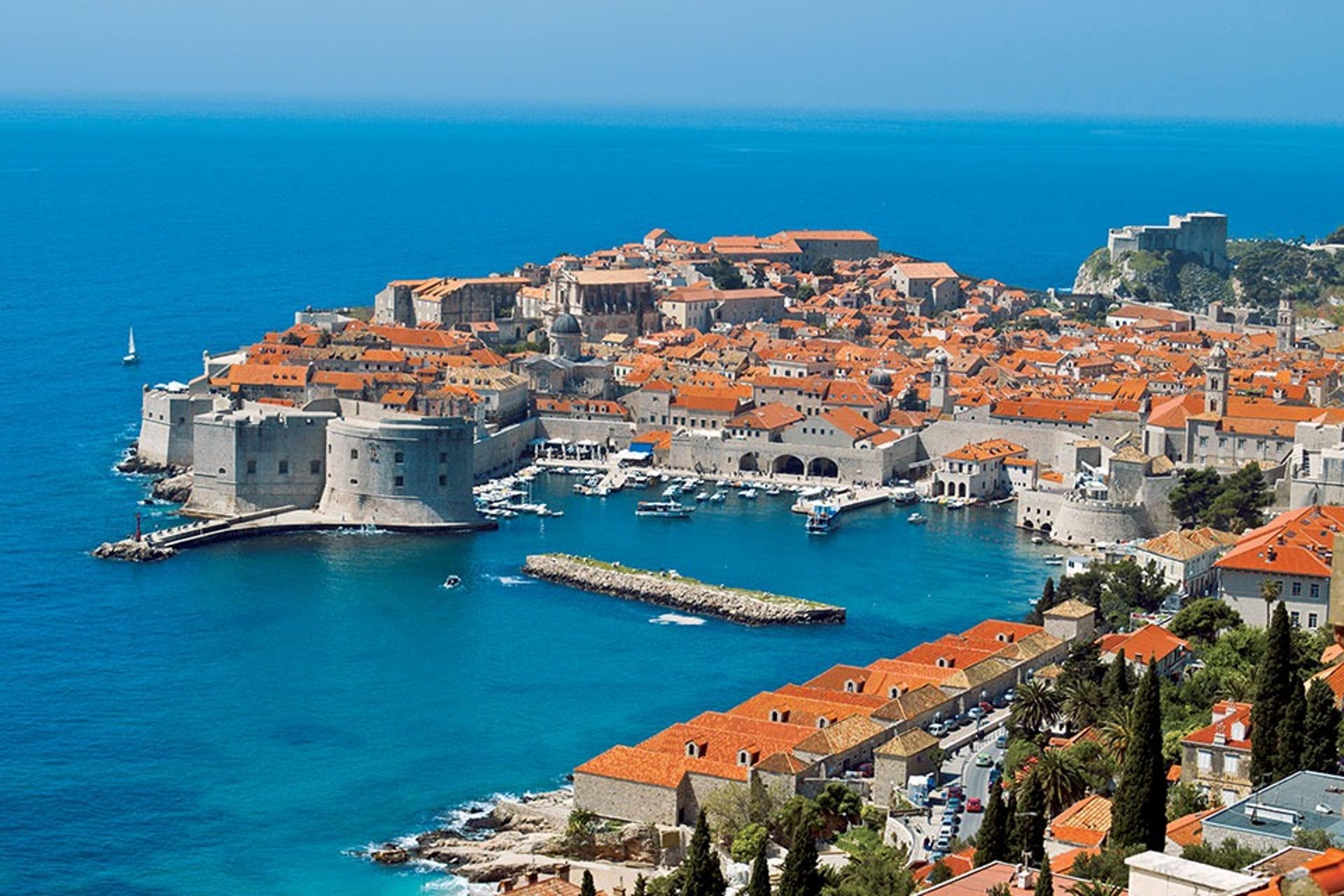
Croatia has one of those coastlines that makes you genuinely wonder how it isn't more famous, and then you arrive and realise it absolutely is. Dubrovnik is the jewel: a medieval walled city of white limestone streets, baroque fountains, and terracotta rooftops rising from cliffs above the most vivid turquoise sea you've ever seen. But Croatia is far more than Dubrovnik. The islands, Hvar, Brač, Vis, Korčula, each carry their own character, from the glamorous harbours of Hvar to the wild, unhurried beauty of Vis. Inland, Plitvice Lakes National Park is one of Europe's most extraordinary natural spectacles: a cascade of sixteen terraced lakes connected by waterfalls so turquoise they look artificially lit. The Dalmatian coast rewards slow travel, a week island-hopping by ferry, swimming in hidden coves, eating fresh-caught fish at harbour-side konobas, is as close to a perfect holiday as travel gets.

Ancient City Walls Crystal Adriatic
Island Hopping Fresh Seafood
Why Travelers Keep Coming Back to Croatia
The Adriatic light is part of it - that particular quality of late afternoon sun on white limestone and blue water that photographs can approximate but never fully capture. But Croatia also rewards slow travel: small fishing villages where the konoba (family tavern) serves whatever came off the boat that morning, island-hopping routes where time becomes elastic, and old towns like Trogir and KorÄula where life still happens within the medieval walls.
Best Time to Visit Croatia
Spring (May - June)
is the ideal window - warm enough for swimming, before the peak summer crowds and prices. The sea is clear and the coast isn't overrun.
Autumn (September, October)
is excellent. The sea stays warm from summer, the crowds diminish, and the light is extraordinary. September is arguably Croatia's best month.
Summer (July - August)
is peak season. Dubrovnik and Hvar are at their busiest and most expensive. The weather is reliably hot and the Adriatic is glorious - but book everything well in advance.
Winter (November - April)
sees the coast go very quiet - many island restaurants and hotels close. But Dubrovnik and Split in winter have a genuine, unhurried character that summer visitors rarely see.
Why Travelers Love It
Croatia has one of those coastlines that makes you genuinely wonder how it isn't more famous, and then you arrive and realise it absolutely is. Dubrovnik is the jewel: a medieval walled city of white limestone streets, baroque fountains, and terracotta rooftops rising from cliffs above the most vivid turquoise sea you've ever seen. But Croatia is far more than Dubrovnik. The islands, Hvar, Brač, Vis, Korčula, each carry their own character, from the glamorous harbours of Hvar to the wild, unhurried beauty of Vis. Inland, Plitvice Lakes National Park is one of Europe's most extraordinary natural spectacles: a cascade of sixteen terraced lakes connected by waterfalls so turquoise they look artificially lit. The Dalmatian coast rewards slow travel, a week island-hopping by ferry, swimming in hidden coves, eating fresh-caught fish at harbour-side konobas, is as close to a perfect holiday as travel gets.
Ancient City Walls Crystal Adriatic
Island Hopping Fresh Seafood
Why Travelers Keep Coming Back to Croatia
The Adriatic light is part of it - that particular quality of late afternoon sun on white limestone and blue water that photographs can approximate but never fully capture. But Croatia also rewards slow travel: small fishing villages where the konoba (family tavern) serves whatever came off the boat that morning, island-hopping routes where time becomes elastic, and old towns like Trogir and KorÄula where life still happens within the medieval walls.
Best Time to Visit Croatia
Spring (May - June)
is the ideal window - warm enough for swimming, before the peak summer crowds and prices. The sea is clear and the coast isn't overrun.
Autumn (September, October)
is excellent. The sea stays warm from summer, the crowds diminish, and the light is extraordinary. September is arguably Croatia's best month.
Summer (July - August)
is peak season. Dubrovnik and Hvar are at their busiest and most expensive. The weather is reliably hot and the Adriatic is glorious - but book everything well in advance.
Winter (November - April)
sees the coast go very quiet - many island restaurants and hotels close. But Dubrovnik and Split in winter have a genuine, unhurried character that summer visitors rarely see.
Explore by City


Dubrovnik for medieval drama and Adriatic beauty. Split for Roman ruins woven into modern city life. Hvar for glamour and island parties. Zagreb for culture and cafe society. Plitvice for a natural wonder unlike anything else.
Getting Around Croatia
Croatia's coastline is long and the main cities are spread across it. Split is the main transport hub for the Dalmatian islands - ferries run to Hvar, Brac, Vis, and Korcula from Split's ferry terminal. Dubrovnik is accessible by ferry from Split (around 4.5 hours) or by air from most European cities. For Plitvice, a car or guided bus tour from Split or Zagreb is the practical option. Island-hopping is best done by Jadrolinija ferry or catamaran.
Top Regions & What to See
Dubrovnik & the Dalmatian South
Dubrovnik is the defining Croatian experience - a perfectly preserved medieval walled city on a limestone promontory above the Adriatic. Walk the full circuit of the city walls (allow 1.5 - 2 hours) for the finest views. The old town within is a maze of marble streets, baroque churches, and seafood restaurants. Day trips from Dubrovnik include the Elafiti Islands (Lopud, Sipan, Kolocep), Kotor in Montenegro, and the wine-producing Peljesac Peninsula.
Split & Central Dalmatia
Split is built literally inside and around the Palace of the Roman Emperor Diocletian - people live, eat, and run bars within its ancient walls. The Peristyle (palace courtyard) is one of the most atmospheric places in Europe for a morning coffee. Day trips from Split include Trogir (a UNESCO-listed island town connected by bridge), the island of BraÄ (home of Zlatni Rat, Croatia's most famous beach), and Hvar town.
Hvar
Hvar is Croatia's most glamorous island - lavender fields in the interior, a Renaissance cathedral and fortress above the harbour, and a reputation for quality dining and nightlife. The Pakleni Islands, just offshore, are reached by water taxi and offer quieter swimming and shade. The island's wines (Plavac Mali from the DingaÄ peninsula) are among Croatia's finest.
Plitvice Lakes National Park
In the forested interior, Plitvice is one of Europe's natural wonders - 16 terraced lakes connected by waterfalls and linked by wooden boardwalks through the forest. The water is extraordinarily clear and colors shift between turquoise, green, blue, and grey depending on the season and minerals. A full day is required to do it justice. Book timed entry tickets in advance.
Istria
Croatia's northwestern peninsula has an Italian feel - Venetian architecture, truffle forests, olive groves, and a wine culture producing excellent Malvazija whites and Teran reds. The hilltop town of Motovun, the Roman amphitheatre at Pula, and the coastal resort of Rovinj make Istria an outstanding destination in its own right.
Explore by City

Dubrovnik for medieval drama and Adriatic beauty. Split for Roman ruins woven into modern city life. Hvar for glamour and island parties. Zagreb for culture and cafe society. Plitvice for a natural wonder unlike anything else.
Getting Around Croatia
Croatia's coastline is long and the main cities are spread across it. Split is the main transport hub for the Dalmatian islands - ferries run to Hvar, Brac, Vis, and Korcula from Split's ferry terminal. Dubrovnik is accessible by ferry from Split (around 4.5 hours) or by air from most European cities. For Plitvice, a car or guided bus tour from Split or Zagreb is the practical option. Island-hopping is best done by Jadrolinija ferry or catamaran.
Top Regions & What to See
Dubrovnik & the Dalmatian South
Dubrovnik is the defining Croatian experience - a perfectly preserved medieval walled city on a limestone promontory above the Adriatic. Walk the full circuit of the city walls (allow 1.5 - 2 hours) for the finest views. The old town within is a maze of marble streets, baroque churches, and seafood restaurants. Day trips from Dubrovnik include the Elafiti Islands (Lopud, Sipan, Kolocep), Kotor in Montenegro, and the wine-producing Peljesac Peninsula.
Split & Central Dalmatia
Split is built literally inside and around the Palace of the Roman Emperor Diocletian - people live, eat, and run bars within its ancient walls. The Peristyle (palace courtyard) is one of the most atmospheric places in Europe for a morning coffee. Day trips from Split include Trogir (a UNESCO-listed island town connected by bridge), the island of BraÄ (home of Zlatni Rat, Croatia's most famous beach), and Hvar town.
Hvar
Hvar is Croatia's most glamorous island - lavender fields in the interior, a Renaissance cathedral and fortress above the harbour, and a reputation for quality dining and nightlife. The Pakleni Islands, just offshore, are reached by water taxi and offer quieter swimming and shade. The island's wines (Plavac Mali from the DingaÄ peninsula) are among Croatia's finest.
Plitvice Lakes National Park
In the forested interior, Plitvice is one of Europe's natural wonders - 16 terraced lakes connected by waterfalls and linked by wooden boardwalks through the forest. The water is extraordinarily clear and colors shift between turquoise, green, blue, and grey depending on the season and minerals. A full day is required to do it justice. Book timed entry tickets in advance.
Istria
Croatia's northwestern peninsula has an Italian feel - Venetian architecture, truffle forests, olive groves, and a wine culture producing excellent Malvazija whites and Teran reds. The hilltop town of Motovun, the Roman amphitheatre at Pula, and the coastal resort of Rovinj make Istria an outstanding destination in its own right.
Don't Miss
Plitvice Lakes National Park
Walking the 2km circuit of Dubrovnik's medieval city walls is one of travel's great experiences, a slow loop of terracotta rooftops, church domes, and the shimmering Adriatic stretching to the horizon. Go at sunrise before the cruise ships arrive, and the city feels like it belongs entirely to you.
Dubrovnik's City Walls
Island Hopping the Dalmatian Coast
Sixteen terraced lakes, connected by over 90 waterfalls, flowing through a lush limestone canyon, Plitvice is one of those places that photographers struggle to do justice because the colors look impossible. The water is genuinely that turquoise. The boardwalks that wind above and beside the cascades are among the most beautiful walks in Europe.
The true magic of Croatia is found between islands. Ferry from Split to Hvar for buzzing harbour nightlife. Continue to Vis for wild beaches and wartime history. Cross to Korčula, Marco Polo's alleged birthplace, for medieval stone streets and excellent local wine. Every island is worth the journey.
Croatia Day Trips & Activities
Croatia has established itself as one of the Mediterranean's most desirable destinations - and it's earned the reputation honestly. The Adriatic coastline is extraordinary: a thousand islands, translucent water in shades that shift from turquoise to deep jade, and medieval walled cities that have been continuously inhabited for over a thousand years. It's a country that delivers both the dramatic and the intimate, often within the same day.
Beyond the coast, Croatia has a mountainous interior, wine regions producing increasingly serious bottles, thermal spa towns in Slavonia, and the staggering travertine waterfalls of Plitvice Lakes - one of Europe's most spectacular national parks. For travelers who want to combine history, natural beauty, and excellent food and wine, Croatia delivers with remarkable consistency.
Don't Miss
Plitvice Lakes National Park
Walking the 2km circuit of Dubrovnik's medieval city walls is one of travel's great experiences, a slow loop of terracotta rooftops, church domes, and the shimmering Adriatic stretching to the horizon. Go at sunrise before the cruise ships arrive, and the city feels like it belongs entirely to you.
Dubrovnik's City Walls
Island Hopping the Dalmatian Coast
Sixteen terraced lakes, connected by over 90 waterfalls, flowing through a lush limestone canyon, Plitvice is one of those places that photographers struggle to do justice because the colors look impossible. The water is genuinely that turquoise. The boardwalks that wind above and beside the cascades are among the most beautiful walks in Europe.
The true magic of Croatia is found between islands. Ferry from Split to Hvar for buzzing harbour nightlife. Continue to Vis for wild beaches and wartime history. Cross to Korčula, Marco Polo's alleged birthplace, for medieval stone streets and excellent local wine. Every island is worth the journey.
Croatia Day Trips & Activities
Croatia has established itself as one of the Mediterranean's most desirable destinations - and it's earned the reputation honestly. The Adriatic coastline is extraordinary: a thousand islands, translucent water in shades that shift from turquoise to deep jade, and medieval walled cities that have been continuously inhabited for over a thousand years. It's a country that delivers both the dramatic and the intimate, often within the same day.
Beyond the coast, Croatia has a mountainous interior, wine regions producing increasingly serious bottles, thermal spa towns in Slavonia, and the staggering travertine waterfalls of Plitvice Lakes - one of Europe's most spectacular national parks. For travelers who want to combine history, natural beauty, and excellent food and wine, Croatia delivers with remarkable consistency.
Top Reasons to Visit
✔ One of the Mediterranean's most dramatic and unspoiled coastlines, the Adriatic clarity has to be seen to be believed
✔ Dubrovnik, a walled medieval city of extraordinary beauty and remarkable completeness
✔ Island-hopping culture that rewards spontaneity, slow travel, and anyone who loves the sea
✔ World-class seafood and Dalmatian wine at prices that still feel like a secret compared to the rest of the Mediterranean
✔ Dalmatia: fresh grilled fish and shellfish (order by weight at a good konoba), prstaci (date mussels, now protected but historically a delicacy), peka (meat or octopus slow-cooked under an iron bell covered in embers)
✔ Istria: truffle pasta (black and white truffles from the Motovun forest are world-class), Istrian prosciutto, fresh seafood, and excellent olive oil
✔ Dubrovnik: black risotto (crni rizot) made with cuttlefish ink, fresh oysters from the Peljesac Peninsula, and local Plavac Mali red wine
✔ Everywhere: Croatian olive oil and the local spit-roasted lamb (janjetina) in the Dalmatian interior are outstanding
✔ Wine: Plavac Mali (powerful Dalmatian red), Malvazija (crisp Istrian white), Grk and Posip (white wines from Korcula) - Croatian wine is seriously underrated internationally
What to Eat & Drink
Croatia Day Trips & Activities
Croatia has established itself as one of the Mediterranean's most desirable destinations - and it's earned the reputation honestly. The Adriatic coastline is extraordinary: a thousand islands, translucent water in shades that shift from turquoise to deep jade, and medieval walled cities that have been continuously inhabited for over a thousand years. It's a country that delivers both the dramatic and the intimate, often within the same day.
Beyond the coast, Croatia has a mountainous interior, wine regions producing increasingly serious bottles, thermal spa towns in Slavonia, and the staggering travertine waterfalls of Plitvice Lakes - one of Europe's most spectacular national parks. For travelers who want to combine history, natural beauty, and excellent food and wine, Croatia delivers with remarkable consistency.
Top Reasons to Visit
✔ One of the Mediterranean's most dramatic and unspoiled coastlines, the Adriatic clarity has to be seen to be believed
✔ Dubrovnik, a walled medieval city of extraordinary beauty and remarkable completeness
✔ Island-hopping culture that rewards spontaneity, slow travel, and anyone who loves the sea
✔ World-class seafood and Dalmatian wine at prices that still feel like a secret compared to the rest of the Mediterranean