
Ireland Best Day Trips & Activities. Explore Ancient East & Wild Atlantic
Where myths are real, the welcome is genuine & the scenery stops you cold
Emerald Landscapes & Ancient Soul
TravelWell Guide
Ireland Best Day Trips & Activities. Explore Ancient East & Wild Atlantic
Where myths are real, the welcome is genuine & the scenery stops you cold
Emerald Landscapes & Ancient Soul
TravelWell Guide
Why Travelers Love It
Ireland has a quality that's almost impossible to manufacture: genuine warmth. Not the performed hospitality of a tourist industry, but a real, instinctive openness to strangers that you feel the moment you walk into a pub, ask for directions, or simply make eye contact in a village square. The Irish landscape matches this feeling, it's generous and dramatic in equal measure. The Cliffs of Moher rising 214 metres above the wild Atlantic. The otherworldly limestone plateau of the Burren. The lakes and mountains of Killarney. The wild, wave-battered Dingle Peninsula. The ancient passage tombs of Newgrange, older than Stonehenge and still perfectly aligned to catch the winter solstice sunrise 5,200 years later. Dublin is the kind of capital city that doesn't try too hard, its Georgian squares, literary pubs, and the craic (untranslatable, but something between atmosphere, humour, and community spirit) make it endlessly easy to spend time in. Ireland is a country that rewards you most when you slow down and let it come to you.

🌿 Emerald Landscapes 🏰 Ancient Ruins
🎵 Traditional Music 🍺 Pub Culture
Why Travelers Keep Coming Back to Ireland
Ireland has a warmth of welcome that isn't performed - it's simply part of the culture. The Irish are genuinely curious about visitors, generous with their time, and unmatched storytellers. Add a literary tradition that produced Yeats, Joyce, Beckett, and Heaney, a music culture where spontaneous pub sessions (trad music, unannounced, any evening) are still common, and a landscape of extraordinary variety and beauty - and Ireland becomes a country that's very difficult to leave without already planning a return.
Best Time to Visit Ireland
Spring (May - June)
is arguably Ireland's finest window - long evenings (sunset past 10pm in June), wildflowers across the Burren and Connemara, and the weather at its most cooperative. The crowds of summer haven't yet arrived.
Summer (July - August)
brings the best weather odds and the liveliest festivals. The Galway Races, the Kilkenny Arts Festival, and countless local gatherings make this the most culturally active period. Book accommodation ahead on the west coast.
Autumn (September - October)
is excellent - golden light on the mountains and bogs, quieter roads, and the harvest festivals of rural Ireland. The colours of Killarney National Park in October are extraordinary.
Winter (November - March)
is wet and short on daylight, but Dublin in winter is lively, cozy, and atmospheric. The Christmas markets and St. Stephen's Day traditions are worth experiencing. The west coast in a winter storm is genuinely dramatic.
Why Travelers Love It
Ireland has a quality that's almost impossible to manufacture: genuine warmth. Not the performed hospitality of a tourist industry, but a real, instinctive openness to strangers that you feel the moment you walk into a pub, ask for directions, or simply make eye contact in a village square. The Irish landscape matches this feeling, it's generous and dramatic in equal measure. The Cliffs of Moher rising 214 metres above the wild Atlantic. The otherworldly limestone plateau of the Burren. The lakes and mountains of Killarney. The wild, wave-battered Dingle Peninsula. The ancient passage tombs of Newgrange, older than Stonehenge and still perfectly aligned to catch the winter solstice sunrise 5,200 years later. Dublin is the kind of capital city that doesn't try too hard, its Georgian squares, literary pubs, and the craic (untranslatable, but something between atmosphere, humour, and community spirit) make it endlessly easy to spend time in. Ireland is a country that rewards you most when you slow down and let it come to you.
Why Travelers Keep Coming Back to Ireland
Ireland has a warmth of welcome that isn't performed - it's simply part of the culture. The Irish are genuinely curious about visitors, generous with their time, and unmatched storytellers. Add a literary tradition that produced Yeats, Joyce, Beckett, and Heaney, a music culture where spontaneous pub sessions (trad music, unannounced, any evening) are still common, and a landscape of extraordinary variety and beauty - and Ireland becomes a country that's very difficult to leave without already planning a return.
Best Time to Visit Ireland
Spring (May - June)
is arguably Ireland's finest window - long evenings (sunset past 10pm in June), wildflowers across the Burren and Connemara, and the weather at its most cooperative. The crowds of summer haven't yet arrived.
Summer (July - August)
brings the best weather odds and the liveliest festivals. The Galway Races, the Kilkenny Arts Festival, and countless local gatherings make this the most culturally active period. Book accommodation ahead on the west coast.
Autumn (September - October)
is excellent - golden light on the mountains and bogs, quieter roads, and the harvest festivals of rural Ireland. The colours of Killarney National Park in October are extraordinary.
Winter (November - March)
is wet and short on daylight, but Dublin in winter is lively, cozy, and atmospheric. The Christmas markets and St. Stephen's Day traditions are worth experiencing. The west coast in a winter storm is genuinely dramatic.
Explore by City


Dublin for Georgian elegance, literary history, and the world's best pub culture. Galway for a bohemian Atlantic city full of music and festival spirit. Cork for Ireland's food capital and a city that punches well above its size. Killarney for the lakes, mountains, and jaunting cars of Kerry. Dingle for the most atmospheric and beautiful peninsula in Ireland.
Getting Around Ireland
Ireland's rail network is limited but covers the main cities - Dublin to Cork (2.5 hours), Dublin to Galway (2.25 hours), Dublin to Belfast (2 hours). For the west coast and rural areas, car hire is the most practical option and opens up the country enormously. Guided day trips from Dublin and Galway cover most of the major highlights efficiently.
Top Regions & What to See
Dublin & the East
Dublin is compact, walkable, and deeply literary. Trinity College (the Book of Kells, the Long Room library), the National Museum, the Chester Beatty Library (one of the world's great collections of manuscripts), and the Georgian squares of Merrion and Fitzwilliam anchor the cultural centre. The pub culture of Temple Bar gets the attention, but the quieter locals of Stoneybatter, Portobello, and Ranelagh are where the city actually lives.
Day trips from Dublin: Glendalough (a 6th-century monastic settlement in a glacial valley - extraordinary), Newgrange (a Neolithic passage tomb built 5,200 years ago, aligned with the winter solstice), the Wicklow Mountains, and the Boyne Valley battlefield and heritage sites.
The West Coast & Connemara
The west is the Ireland of the imagination - and it lives up entirely. Galway is the most vibrant city outside Dublin, with a walkable old town, excellent seafood, spontaneous trad sessions, and a gateway to Connemara's haunting bog and mountain landscape. The Aran Islands (reachable by ferry from Doolin or Rossaveel) are ancient, isolated, and extraordinary - Dun Aonghasa, a prehistoric cliff-top fort on Inis Mor, is one of Ireland's most powerful sites.
The Cliffs of Moher & the Burren
The Cliffs of Moher rise 214 meters above the Atlantic along an 8km stretch of County Clare coastline. The view north toward the Aran Islands on a clear day is one of Ireland's most iconic. The Burren - a limestone karst landscape stretching across north Clare - is botanically unique: Arctic, Mediterranean, and alpine plants grow together in the crevices of a vast, pale, treeless plain. Extraordinary and unlike anywhere else in Europe.
Kerry & the Southwest
Killarney and the Ring of Kerry are Ireland's most visited region - and despite the tourist infrastructure, the landscape genuinely earns it. The MacGillycuddy's Reeks (Ireland's highest mountains), Killarney's lake system, the Skellig Islands (remote sea stacks with a 6th-century monastery that served as a Star Wars filming location), and the Dingle Peninsula are all outstanding.
The Ancient East & Northern Ireland
The Ancient East corridor connects Ireland's most important prehistoric and medieval sites. Cashel (the Rock of Cashel, a medieval cathedral complex on a limestone outcrop), Kilkenny (a perfectly preserved Norman city), and the Boyne Valley megalithic tombs form a compelling route. Belfast, in Northern Ireland, has transformed remarkably - the Titanic Museum is world-class, the Cathedral Quarter buzzes, and the murals of the Falls and Shankill Roads are among the most powerful examples of political street art in the world.
Explore by City

Dublin for Georgian elegance, literary history, and the world's best pub culture. Galway for a bohemian Atlantic city full of music and festival spirit. Cork for Ireland's food capital and a city that punches well above its size. Killarney for the lakes, mountains, and jaunting cars of Kerry. Dingle for the most atmospheric and beautiful peninsula in Ireland.
Getting Around Ireland
Ireland's rail network is limited but covers the main cities - Dublin to Cork (2.5 hours), Dublin to Galway (2.25 hours), Dublin to Belfast (2 hours). For the west coast and rural areas, car hire is the most practical option and opens up the country enormously. Guided day trips from Dublin and Galway cover most of the major highlights efficiently.
Top Regions & What to See
Dublin & the East
Dublin is compact, walkable, and deeply literary. Trinity College (the Book of Kells, the Long Room library), the National Museum, the Chester Beatty Library (one of the world's great collections of manuscripts), and the Georgian squares of Merrion and Fitzwilliam anchor the cultural centre. The pub culture of Temple Bar gets the attention, but the quieter locals of Stoneybatter, Portobello, and Ranelagh are where the city actually lives.
Day trips from Dublin: Glendalough (a 6th-century monastic settlement in a glacial valley - extraordinary), Newgrange (a Neolithic passage tomb built 5,200 years ago, aligned with the winter solstice), the Wicklow Mountains, and the Boyne Valley battlefield and heritage sites.
The West Coast & Connemara
The west is the Ireland of the imagination - and it lives up entirely. Galway is the most vibrant city outside Dublin, with a walkable old town, excellent seafood, spontaneous trad sessions, and a gateway to Connemara's haunting bog and mountain landscape. The Aran Islands (reachable by ferry from Doolin or Rossaveel) are ancient, isolated, and extraordinary - Dun Aonghasa, a prehistoric cliff-top fort on Inis Mor, is one of Ireland's most powerful sites.
The Cliffs of Moher & the Burren
The Cliffs of Moher rise 214 meters above the Atlantic along an 8km stretch of County Clare coastline. The view north toward the Aran Islands on a clear day is one of Ireland's most iconic. The Burren - a limestone karst landscape stretching across north Clare - is botanically unique: Arctic, Mediterranean, and alpine plants grow together in the crevices of a vast, pale, treeless plain. Extraordinary and unlike anywhere else in Europe.
Kerry & the Southwest
Killarney and the Ring of Kerry are Ireland's most visited region - and despite the tourist infrastructure, the landscape genuinely earns it. The MacGillycuddy's Reeks (Ireland's highest mountains), Killarney's lake system, the Skellig Islands (remote sea stacks with a 6th-century monastery that served as a Star Wars filming location), and the Dingle Peninsula are all outstanding.
The Ancient East & Northern Ireland
The Ancient East corridor connects Ireland's most important prehistoric and medieval sites. Cashel (the Rock of Cashel, a medieval cathedral complex on a limestone outcrop), Kilkenny (a perfectly preserved Norman city), and the Boyne Valley megalithic tombs form a compelling route. Belfast, in Northern Ireland, has transformed remarkably - the Titanic Museum is world-class, the Cathedral Quarter buzzes, and the murals of the Falls and Shankill Roads are among the most powerful examples of political street art in the world.
Don't Miss
A Traditional Irish Music Session
Standing at the edge of the Cliffs of Moher, 214 metres of sheer rock face dropping straight into the churning Atlantic, is one of Ireland's defining experiences. The views along the cliff edge to O'Brien's Tower, and south toward the Aran Islands on a clear day, are simply stunning. Come early morning when the light is golden and the car parks are empty.
The Cliffs of Moher
Newgrange Passage Tomb
In small pubs across the west of Ireland, Doolin in County Clare, Mulligan's in Dublin, Tigh Coili in Galway, musicians gather without fanfare and play traditional Irish music: fiddles, uilleann pipes, bodhráns, tin whistles. It's not a performance for tourists. It's a living tradition, and sitting in the corner with a Guinness while it happens around you is one of travel's great unprogrammed moments.
Built around 3,200 BC, older than the Egyptian pyramids and Stonehenge, Newgrange is one of the most significant prehistoric sites on earth. A circular mound with a 19-metre passage leading to a burial chamber, it was constructed with such precision that at the winter solstice, a beam of sunlight travels the full length of the passage and illuminates the chamber for exactly 17 minutes. Tickets for the solstice are allocated by lottery years in advance.
Ireland Day Trips & Activities
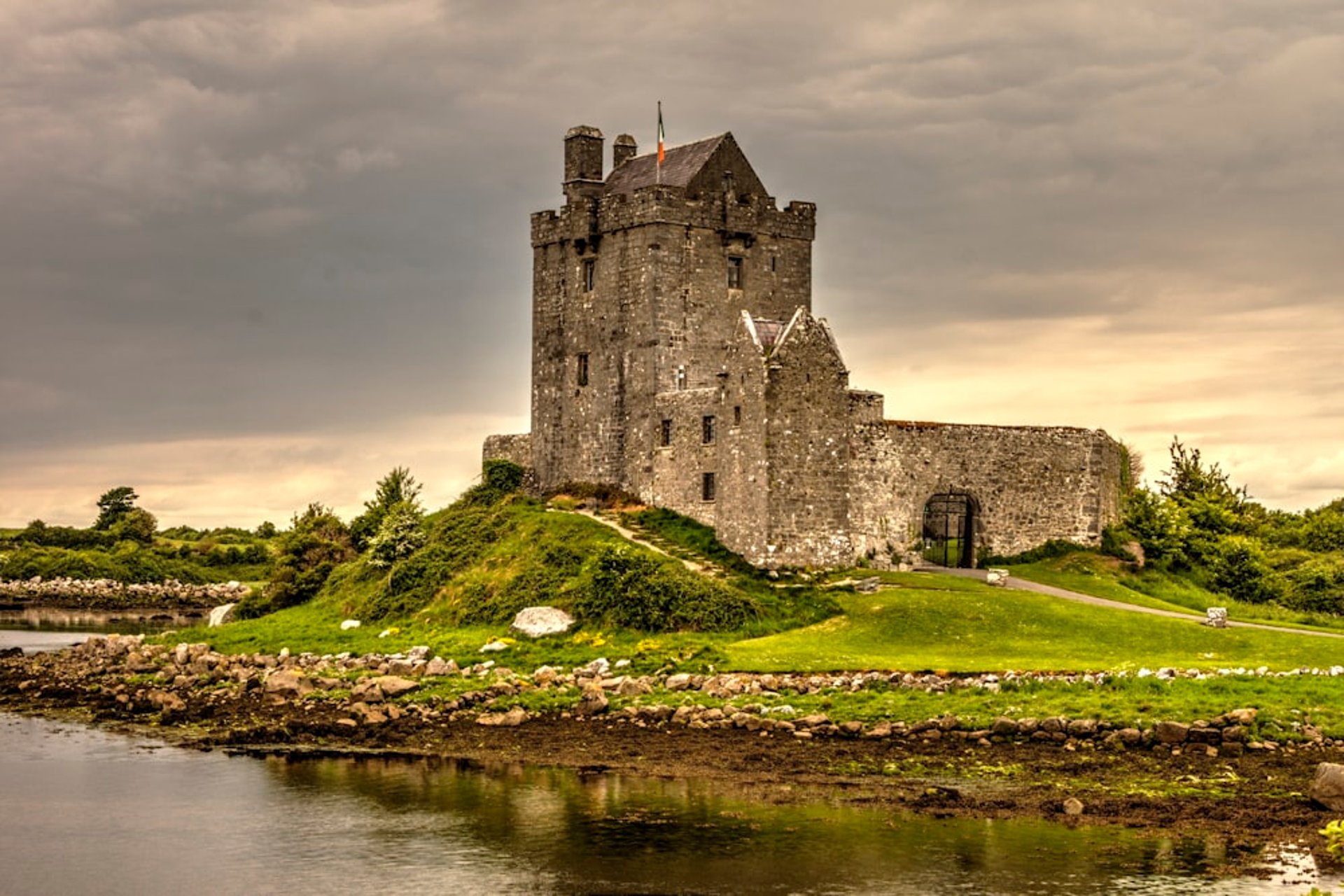
Ireland is one of those countries that gets into your bones. The landscape is softer and wilder than you expect - Atlantic cliffs that drop hundreds of feet into churning sea, green valleys cut by slow rivers, medieval ruins standing in fields that haven't changed in centuries. The pace is different here too. Conversations start easily and run long. A planned half-hour stop in a village pub becomes two hours, and nobody minds.
What makes Ireland remarkable for day trippers and experience seekers is the sheer density of things to see within a short drive of its main cities. Dublin is a brilliant base - Glendalough, the Wicklow Mountains, and the Boyne Valley are all within an hour. And for those who venture further, the west coast - Connemara, the Aran Islands, the Cliffs of Moher, and the Wild Atlantic Way - delivers some of the most dramatic coastal scenery in Europe.
Don't Miss
A Traditional Irish Music Session
Standing at the edge of the Cliffs of Moher, 214 metres of sheer rock face dropping straight into the churning Atlantic, is one of Ireland's defining experiences. The views along the cliff edge to O'Brien's Tower, and south toward the Aran Islands on a clear day, are simply stunning. Come early morning when the light is golden and the car parks are empty.
The Cliffs of Moher
Newgrange Passage Tomb
In small pubs across the west of Ireland, Doolin in County Clare, Mulligan's in Dublin, Tigh Coili in Galway, musicians gather without fanfare and play traditional Irish music: fiddles, uilleann pipes, bodhráns, tin whistles. It's not a performance for tourists. It's a living tradition, and sitting in the corner with a Guinness while it happens around you is one of travel's great unprogrammed moments.
Built around 3,200 BC, older than the Egyptian pyramids and Stonehenge, Newgrange is one of the most significant prehistoric sites on earth. A circular mound with a 19-metre passage leading to a burial chamber, it was constructed with such precision that at the winter solstice, a beam of sunlight travels the full length of the passage and illuminates the chamber for exactly 17 minutes. Tickets for the solstice are allocated by lottery years in advance.
Ireland Day Trips & Activities
Ireland is one of those countries that gets into your bones. The landscape is softer and wilder than you expect - Atlantic cliffs that drop hundreds of feet into churning sea, green valleys cut by slow rivers, medieval ruins standing in fields that haven't changed in centuries. The pace is different here too. Conversations start easily and run long. A planned half-hour stop in a village pub becomes two hours, and nobody minds.
What makes Ireland remarkable for day trippers and experience seekers is the sheer density of things to see within a short drive of its main cities. Dublin is a brilliant base - Glendalough, the Wicklow Mountains, and the Boyne Valley are all within an hour. And for those who venture further, the west coast - Connemara, the Aran Islands, the Cliffs of Moher, and the Wild Atlantic Way - delivers some of the most dramatic coastal scenery in Europe.
Top Reasons to Visit
✔ The warmest and most genuine welcome in Europe, Irish hospitality is instinctive, not scripted
✔ Wild Atlantic scenery that ranges from heartbreakingly beautiful to dramatically raw
✔ A storytelling culture, through music, literature, and conversation, that has produced Yeats, Joyce, Beckett, and Heaney and continues to this day
✔ Ancient history stretching back 5,000 years, waiting quietly in fields, clifftops, and stone circles that most visitors walk straight past
✔ Dublin: fresh oysters from Galway Bay at a seafood bar, Irish stew (lamb, potato, onion - simple, perfect), soda bread warm from the oven, and a full Irish breakfast as a meal rather than a quick start
✔ The West: Galway oysters (some of the finest in the world, served simply with brown bread and Guinness), Atlantic seafood chowder, smoked salmon from a river smokehouse
✔ Kerry & Cork: farmhouse cheeses (Cashel Blue, Gubeen, Ardrahan - Ireland's artisan cheese scene is world-class), Cork's English Market for the finest local produce, and Ballymaloe's farm-to-table cooking philosophy that changed how Ireland eats
✔ Drinks: Guinness (always better in Ireland - the freshness of the kegs makes a real difference), Irish whiskey (Jameson, Redbreast, Green Spot, and the small-batch craft distilleries now emerging across the country), and craft beer from the excellent microbreweries of Dublin and Cork
What to Eat & Drink
Top Reasons to Visit
✔ The warmest and most genuine welcome in Europe, Irish hospitality is instinctive, not scripted
✔ Wild Atlantic scenery that ranges from heartbreakingly beautiful to dramatically raw
✔ A storytelling culture, through music, literature, and conversation, that has produced Yeats, Joyce, Beckett, and Heaney and continues to this day
✔ Ancient history stretching back 5,000 years, waiting quietly in fields, clifftops, and stone circles that most visitors walk straight past