
Germany Best Day Trips, Local Activities &Vibrant Cities
From Bavarian castles to Berlin's cutting-edge culture
Fairytales, History & Modern Brilliance
TravelWell Guide
Germany Best Day Trips, Local Activities &Vibrant Cities
From Bavarian castles to Berlin's cutting-edge culture
Fairytales, History & Modern Brilliance
TravelWell Guide
Why Travelers Love It
Germany contains multitudes. It's Neuschwanstein Castle rising from forested mountains like something from a Brothers Grimm story, and Berlin's East Side Gallery, where the remnants of the Wall have become one of the world's most powerful open-air art exhibitions. It's a country that has processed its history with unusual honesty, resulting in some of the most thoughtful and powerful memorial sites anywhere. But Germany is also deeply joyful, nowhere more so than during Oktoberfest in Munich, when the entire city seems to pour into vast beer halls in a celebration of Bavarian culture that's been going for over 200 years. The Rhine Valley offers medieval castles and vineyard terraces that rival anything in Europe. The Black Forest is as atmospheric as its name suggests. And cities like Hamburg, Cologne, and Dresden each carry their own compelling identity. Germany rewards the curious traveller with more variety per square kilometre than almost any country on earth.

🏰 Fairytale Castles 🍺 Beer & Oktoberfest
🎨 World-class Museums 🌲 Black Fores
Best Time to Visit Germany
Why Travelers Keep Coming Back to Germany
Germany constantly surprises first-time visitors who arrive with a narrow set of expectations. Yes, the beer is exceptional. But so is the wine (particularly Riesling from the Mosel and Rheingau). The contemporary art scenes in Berlin and Leipzig are world-class. The Christmas markets are not a cliche - they are genuinely magical, particularly in Nuremberg, Dresden, and Cologne. And the outdoor opportunities - hiking in the Bavarian Alps, cycling the Rhine, kayaking the Spree - are outstanding.
Spring (April - June)
is excellent - the Rhine valley and Bavaria are in bloom, beer garden season begins, and the major sights are accessible without summer crowds.
Summer (July - August)
is peak season for outdoor activities, Rhine cruises, and Alpine hiking. Oktoberfest begins in late September and spills into early October - book Munich accommodation months ahead.
Autumn (September, October)
brings golden vineyards along the Mosel and Rhine, cooler walking temperatures in the Alps, and the famous Oktoberfest energy in Bavaria.
Winter (November, December)
is Christmas market season - one of Germany's greatest gifts to European travel culture. Nuremberg, Cologne, Dresden, and Rothenburg ob der Tauber all have exceptional markets. Ski season in the Bavarian Alps runs from December through March.
Why Travelers Love It
Germany contains multitudes. It's Neuschwanstein Castle rising from forested mountains like something from a Brothers Grimm story, and Berlin's East Side Gallery, where the remnants of the Wall have become one of the world's most powerful open-air art exhibitions. It's a country that has processed its history with unusual honesty, resulting in some of the most thoughtful and powerful memorial sites anywhere. But Germany is also deeply joyful, nowhere more so than during Oktoberfest in Munich, when the entire city seems to pour into vast beer halls in a celebration of Bavarian culture that's been going for over 200 years. The Rhine Valley offers medieval castles and vineyard terraces that rival anything in Europe. The Black Forest is as atmospheric as its name suggests. And cities like Hamburg, Cologne, and Dresden each carry their own compelling identity. Germany rewards the curious traveller with more variety per square kilometre than almost any country on earth.
🏰 Fairytale Castles 🍺 Beer & Oktoberfest
🎨 World-class Museums 🌲 Black Fores
Best Time to Visit Germany
Why Travelers Keep Coming Back to Germany
Germany constantly surprises first-time visitors who arrive with a narrow set of expectations. Yes, the beer is exceptional. But so is the wine (particularly Riesling from the Mosel and Rheingau). The contemporary art scenes in Berlin and Leipzig are world-class. The Christmas markets are not a cliche - they are genuinely magical, particularly in Nuremberg, Dresden, and Cologne. And the outdoor opportunities - hiking in the Bavarian Alps, cycling the Rhine, kayaking the Spree - are outstanding.
Spring (April - June)
is excellent - the Rhine valley and Bavaria are in bloom, beer garden season begins, and the major sights are accessible without summer crowds.
Summer (July - August)
is peak season for outdoor activities, Rhine cruises, and Alpine hiking. Oktoberfest begins in late September and spills into early October - book Munich accommodation months ahead.
Autumn (September, October)
brings golden vineyards along the Mosel and Rhine, cooler walking temperatures in the Alps, and the famous Oktoberfest energy in Bavaria.
Winter (November, December)
is Christmas market season - one of Germany's greatest gifts to European travel culture. Nuremberg, Cologne, Dresden, and Rothenburg ob der Tauber all have exceptional markets. Ski season in the Bavarian Alps runs from December through March.
Explore by City


Berlin for history, nightlife, and relentless creativity. Munich for Bavarian tradition and Alpine access. Hamburg for maritime elegance and waterfront culture. Cologne for its cathedral and Rhine-side charm. Dresden for baroque architecture rebuilt from the ashes.
Getting Around Germany
Germany's ICE and IC train network connects major cities efficiently - Berlin to Munich takes 4 hours, Frankfurt to Cologne 1 hour. The Deutschlandticket allows unlimited travel on regional trains and public transport - excellent value for slower, more exploratory travel. For the Rhine cruise, scenic train journeys, and the Romantic Road, dedicated services and guided tours are the best approach.
Top Regions & What to See
Berlin
Berlin is one of the world's great cities - layered, unfinished, and endlessly fascinating. The history is unavoidable: the Brandenburg Gate, the Holocaust Memorial, the remnants of the Berlin Wall, and Checkpoint Charlie all carry enormous weight. But Berlin is also intensely contemporary - the best club culture in Europe, a thriving gallery scene in Mitte and Prenzlauer Berg, world-class street food, and a sense of creative energy that draws artists and entrepreneurs from across the world. Museum Island (Museumsinsel) houses five world-class institutions on a single island in the Spree - a full day minimum.
Munich & Bavaria
Munich is prosperous, beautiful, and deeply Bavarian. The Marienplatz, the Englischer Garten (larger than Central Park), the Deutsches Museum (the world's largest science and technology museum), and the Alte Pinakothek art collection anchor the city. Day trips from Munich are exceptional: Neuschwanstein Castle (the fairy-tale original that inspired Disney), Salzburg in Austria (90 minutes), the Alpine lakes of Starnbergsee and Chiemsee, and Dachau Memorial.
The Rhine & Moselle Valleys
The Middle Rhine Valley between Koblenz and Bingen is a UNESCO World Heritage Site - steep vineyard slopes, medieval castles on every headland, and charming wine towns along both banks. The Moselle (Mosel) river winds through even more dramatic scenery between Trier and Koblenz, with Riesling vineyards so steep they must be hand-harvested. Boat trips, cycling, and wine tasting are the primary activities.
Dresden & Saxony
Dresden was one of Europe's most beautiful Baroque cities before its destruction in 1945 - and its meticulous reconstruction is a story in itself. The Zwinger palace complex, the Frauenkirche cathedral (rebuilt from rubble), and the Semperoper opera house make the Altstadt extraordinary. The Saxon Switzerland National Park (dramatic sandstone rock formations) is a short day trip.
The Romantic Road & Rothenburg ob der Tauber
Germany's most famous scenic route runs 460km from Würzburg through Bavaria to Fussen. Along the way: medieval walled towns (Rothenburg ob der Tauber is the most famous and most preserved), Baroque churches, Bavarian market towns, and the final destination of Neuschwanstein. Best explored by car or guided tour.
Explore by City

Berlin for history, nightlife, and relentless creativity. Munich for Bavarian tradition and Alpine access. Hamburg for maritime elegance and waterfront culture. Cologne for its cathedral and Rhine-side charm. Dresden for baroque architecture rebuilt from the ashes.
Getting Around Germany
Germany's ICE and IC train network connects major cities efficiently - Berlin to Munich takes 4 hours, Frankfurt to Cologne 1 hour. The Deutschlandticket allows unlimited travel on regional trains and public transport - excellent value for slower, more exploratory travel. For the Rhine cruise, scenic train journeys, and the Romantic Road, dedicated services and guided tours are the best approach.
Top Regions & What to See
Berlin
Berlin is one of the world's great cities - layered, unfinished, and endlessly fascinating. The history is unavoidable: the Brandenburg Gate, the Holocaust Memorial, the remnants of the Berlin Wall, and Checkpoint Charlie all carry enormous weight. But Berlin is also intensely contemporary - the best club culture in Europe, a thriving gallery scene in Mitte and Prenzlauer Berg, world-class street food, and a sense of creative energy that draws artists and entrepreneurs from across the world. Museum Island (Museumsinsel) houses five world-class institutions on a single island in the Spree - a full day minimum.
Munich & Bavaria
Munich is prosperous, beautiful, and deeply Bavarian. The Marienplatz, the Englischer Garten (larger than Central Park), the Deutsches Museum (the world's largest science and technology museum), and the Alte Pinakothek art collection anchor the city. Day trips from Munich are exceptional: Neuschwanstein Castle (the fairy-tale original that inspired Disney), Salzburg in Austria (90 minutes), the Alpine lakes of Starnbergsee and Chiemsee, and Dachau Memorial.
The Rhine & Moselle Valleys
The Middle Rhine Valley between Koblenz and Bingen is a UNESCO World Heritage Site - steep vineyard slopes, medieval castles on every headland, and charming wine towns along both banks. The Moselle (Mosel) river winds through even more dramatic scenery between Trier and Koblenz, with Riesling vineyards so steep they must be hand-harvested. Boat trips, cycling, and wine tasting are the primary activities.
Dresden & Saxony
Dresden was one of Europe's most beautiful Baroque cities before its destruction in 1945 - and its meticulous reconstruction is a story in itself. The Zwinger palace complex, the Frauenkirche cathedral (rebuilt from rubble), and the Semperoper opera house make the Altstadt extraordinary. The Saxon Switzerland National Park (dramatic sandstone rock formations) is a short day trip.
The Romantic Road & Rothenburg ob der Tauber
Germany's most famous scenic route runs 460km from Warzburg through Bavaria to Fussen. Along the way: medieval walled towns (Rothenburg ob der Tauber is the most famous and most preserved), Baroque churches, Bavarian market towns, and the final destination of Neuschwanstein. Best explored by car or guided tour.
Don't Miss
The Berlin Wall & East Side Gallery
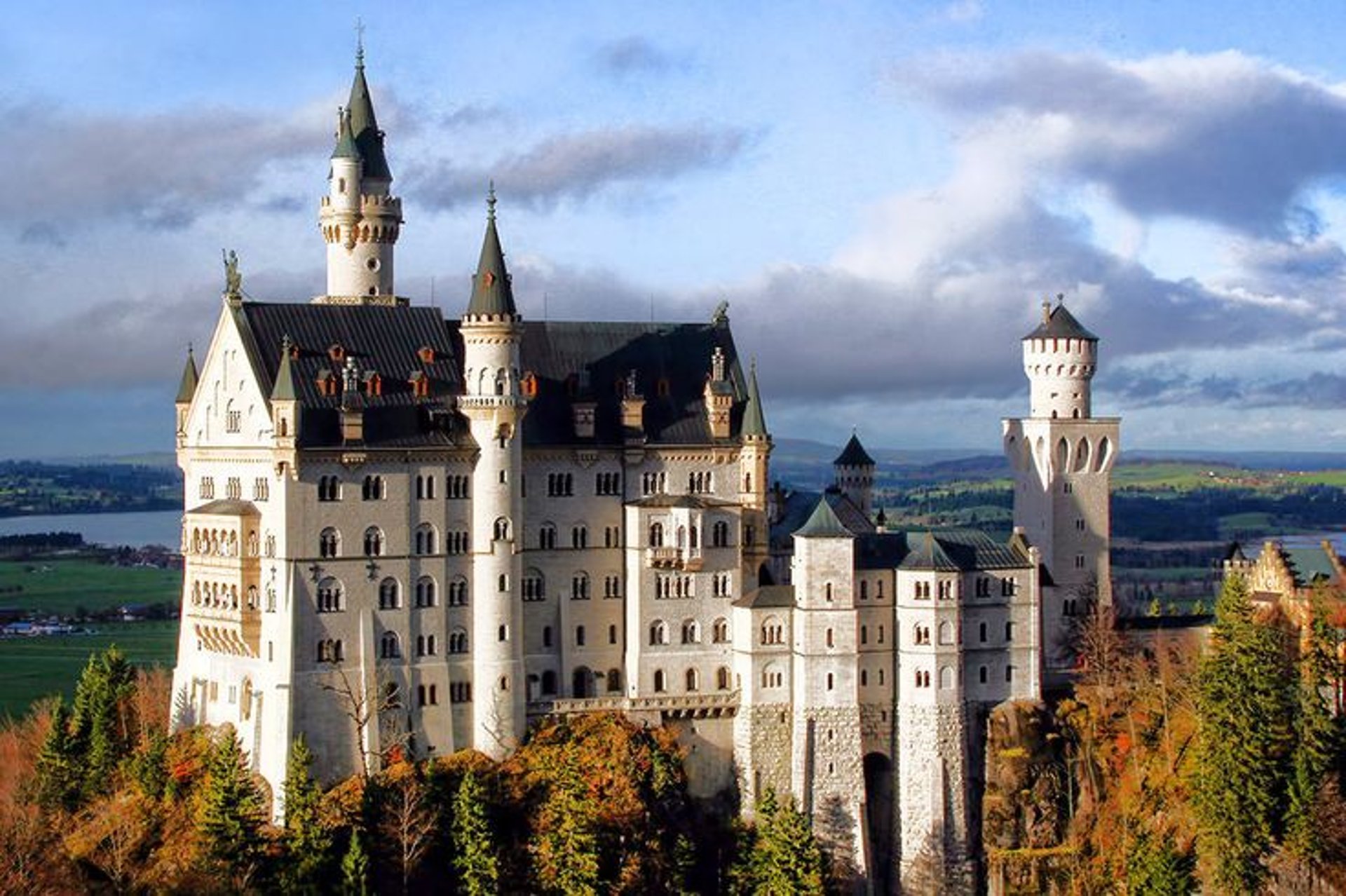
Built by the eccentric King Ludwig II in the 1880s, Neuschwanstein is the world's most famous castle, and the inspiration for Disney's Sleeping Beauty. Perched on a forested mountain above the Bavarian village of Hohenschwangau, it's most dramatic seen from the Marienbrücke bridge at dawn, before the crowds arrive..
Neuschwanstein Castle
Oktoberfest, Munich
The 1.3km stretch of Wall that remains along the East Side Gallery has been transformed into the world's largest open-air gallery, painted by over 100 artists from around the world. Combined with Checkpoint Charlie, the Memorial to the Murdered Jews of Europe, and the DDR Museum, Berlin's history is confronted with intelligence and humility.
The world's largest folk festival draws six million visitors to Munich each October, but it's genuinely more than a drinking event. Traditional Bavarian costume, brass bands, fairground rides, and roast oxen make it a full cultural immersion. Book accommodation months in advance.
Germany Day Trips & Activities
Germany is one of Europe's most rewarding countries to explore slowly - a place where every region has its own dialect, its own cuisine, its own distinct identity, and its own reasons to stay longer than planned. It's a country that carries its history seriously, builds its cities beautifully, and invests in its cultural institutions with an almost philosophical conviction that art, music, and design matter.
For travelers focused on day trips and experiences, Germany delivers at every level. The castle-topped Rhine valley, the fairy-tale Bavarian villages below the Alps, Berlin's unparalleled museum island, and the Black Forest's deep, forested valleys are all connected by one of Europe's finest rail networks - making it easy to cover extraordinary ground without ever rushing.
Don't Miss
The Berlin Wall & East Side Gallery
Built by the eccentric King Ludwig II in the 1880s, Neuschwanstein is the world's most famous castle, and the inspiration for Disney's Sleeping Beauty. Perched on a forested mountain above the Bavarian village of Hohenschwangau, it's most dramatic seen from the Marienbrücke bridge at dawn, before the crowds arrive..
Neuschwanstein Castle
Oktoberfest, Munich
The 1.3km stretch of Wall that remains along the East Side Gallery has been transformed into the world's largest open-air gallery, painted by over 100 artists from around the world. Combined with Checkpoint Charlie, the Memorial to the Murdered Jews of Europe, and the DDR Museum, Berlin's history is confronted with intelligence and humility.
The world's largest folk festival draws six million visitors to Munich each October, but it's genuinely more than a drinking event. Traditional Bavarian costume, brass bands, fairground rides, and roast oxen make it a full cultural immersion. Book accommodation months in advance.
Germany Day Trips & Activities
Germany is one of Europe's most rewarding countries to explore slowly - a place where every region has its own dialect, its own cuisine, its own distinct identity, and its own reasons to stay longer than planned. It's a country that carries its history seriously, builds its cities beautifully, and invests in its cultural institutions with an almost philosophical conviction that art, music, and design matter.
For travelers focused on day trips and experiences, Germany delivers at every level. The castle-topped Rhine valley, the fairy-tale Bavarian villages below the Alps, Berlin's unparalleled museum island, and the Black Forest's deep, forested valleys are all connected by one of Europe's finest rail networks - making it easy to cover extraordinary ground without ever rushing.
Top Reasons to Visit
✔ Ancient castles alongside world-leading modern cities, Germany's range of experiences is genuinely unmatched
✔ Berlin, one of Europe's most dynamic, creative, and culturally complex capitals, endlessly rewarding for the curious
✔ The Romantic Road and Bavarian Alps for scenic touring that belongs on any serious travel list
✔ German food, beer, and Christmas markets, experiences that are deeply rooted in regional tradition and far more nuanced than the stereotypes suggest
✔ Bavaria: Weisswurst (white veal sausage, eaten before noon with sweet mustard), pretzels, roast pork knuckle (Schweinshaxe), Obatzda (cheese spread), and wheat beer (Weissbier) in a beer garden
✔ Berlin: Currywurst (pork sausage in curried ketchup - street food at its most democratic), Doner kebab (Berlin's Doner is a genuine institution), and a rapidly evolving restaurant scene
✔ Rhineland: Sauerbraten (marinated pot roast), Himmel und Erde (black pudding with apple sauce and mashed potato), and Kolsch beer (only ever served in Cologne, only ever in a small cylindrical glass)
✔ Saxon & Eastern Germany: Dresdner Stollen (fruit cake dusted with icing sugar - the Christmas original), Leipzig's Lerche pastries, and excellent coffee culture in both cities
✔ Wine: Germany's finest is white - Riesling from the Mosel and Rheingau (the world's greatest expression of the grape), Spatburgunder (Pinot Noir) from Baden for reds
What to Eat & Drink
Top Reasons to Visit
✔ Ancient castles alongside world-leading modern cities, Germany's range of experiences is genuinely unmatched
✔ Berlin, one of Europe's most dynamic, creative, and culturally complex capitals, endlessly rewarding for the curious
✔ The Romantic Road and Bavarian Alps for scenic touring that belongs on any serious travel list
✔ German food, beer, and Christmas markets, experiences that are deeply rooted in regional tradition and far more nuanced than the stereotypes suggest