
Hungary Best Day Trips & Activities. Explore Imperial History & Thermal Escapes
Grand architecture, thermal spas & a city that never stops surprising
Imperial Beauty on the Danube
TravelWell Guide
Hungary Best Day Trips & Activities. Explore Imperial History & Thermal Escapes
Grand architecture, thermal spas & a city that never stops surprising
Imperial Beauty on the Danube
TravelWell Guide
Why Travelers Love It
Budapest is one of Europe's most underrated capitals, and those who've been find it very hard to stop talking about it. Built across two distinct halves separated by the Danube, hilly, historic Buda on one side, flat, energetic Pest on the other, it's a city of extraordinary visual drama. The Hungarian Parliament Building alone, illuminated in gold at night and reflected in the river below, is one of the most spectacular sights in all of Europe. The city's thermal spa culture is not a tourist gimmick but a centuries-old way of life, Széchenyi, Gellért, and Rudas baths are genuine institutions where locals still come daily. The ruin bar scene that emerged in Budapest's Jewish Quarter has become a cultural phenomenon, a uniquely Hungarian fusion of decay and creativity that you won't find duplicated anywhere else. And then there's the food: hearty, warming, deeply flavourful Central European cuisine, paired with Tokaj wines that have been celebrated since the 17th century.

🏛 Grand Architecture ♨️ Thermal Spas
🍷 Tokaj Wine 🎶 Ruin Bar Culture
Why Travelers Keep Coming Back to Hungary
Budapest has a particular magic that is hard to define and easy to feel. Grand 19th-century boulevards, thermal baths built under Ottoman domes, ruin bars in the crumbling courtyards of the old Jewish Quarter, and a Danube riverfront that UNESCO deemed worthy of World Heritage status - it's a city that operates at several registers simultaneously, and does all of them well. Beyond the capital, Hungary's wine culture and thermal traditions are world-class, and largely undiscovered by international travelers.
Best Time to Visit Hungary
Spring (April - June)
is lovely - Budapest's parks and the Danube riverbanks are beautiful in blossom, and the weather is ideal for sightseeing and outdoor dining.
Summer (July - August)
is warm and lively - outdoor festivals, thermal baths in the open air, and long evenings in the ruin bars. Budapest's Sziget Festival (August) is one of Europe's largest music events.
Autumn (September, October)
is wine harvest season - Eger and Tokaj are at their most atmospheric, and Budapest's cafe culture moves indoors with a cozy, autumnal warmth.
Winter (November - March)
sees Budapest at its most intimate - Christmas markets on Vorosmarty Square, thermal baths in the snow, and the city's extraordinary indoor thermal halls at their most atmospheric.
Why Travelers Love It
Budapest is one of Europe's most underrated capitals, and those who've been find it very hard to stop talking about it. Built across two distinct halves separated by the Danube, hilly, historic Buda on one side, flat, energetic Pest on the other, it's a city of extraordinary visual drama. The Hungarian Parliament Building alone, illuminated in gold at night and reflected in the river below, is one of the most spectacular sights in all of Europe. The city's thermal spa culture is not a tourist gimmick but a centuries-old way of life, Széchenyi, Gellért, and Rudas baths are genuine institutions where locals still come daily. The ruin bar scene that emerged in Budapest's Jewish Quarter has become a cultural phenomenon, a uniquely Hungarian fusion of decay and creativity that you won't find duplicated anywhere else. And then there's the food: hearty, warming, deeply flavourful Central European cuisine, paired with Tokaj wines that have been celebrated since the 17th century.
Why Travelers Keep Coming Back to Hungary
Budapest has a particular magic that is hard to define and easy to feel. Grand 19th-century boulevards, thermal baths built under Ottoman domes, ruin bars in the crumbling courtyards of the old Jewish Quarter, and a Danube riverfront that UNESCO deemed worthy of World Heritage status - it's a city that operates at several registers simultaneously, and does all of them well. Beyond the capital, Hungary's wine culture and thermal traditions are world-class, and largely undiscovered by international travelers.
Best Time to Visit Hungary
Spring (April - June)
is lovely - Budapest's parks and the Danube riverbanks are beautiful in blossom, and the weather is ideal for sightseeing and outdoor dining.
Summer (July - August)
is warm and lively - outdoor festivals, thermal baths in the open air, and long evenings in the ruin bars. Budapest's Sziget Festival (August) is one of Europe's largest music events.
Autumn (September, October)
is wine harvest season - Eger and Tokaj are at their most atmospheric, and Budapest's cafe culture moves indoors with a cozy, autumnal warmth.
Winter (November - March)
sees Budapest at its most intimate - Christmas markets on Vorosmarty Square, thermal baths in the snow, and the city's extraordinary indoor thermal halls at their most atmospheric.
Explore by City


Budapest for imperial grandeur and all-night energy. Eger for baroque charm and Bull's Blood wine. Pécs for a multicultural southern city full of surprises. Debrecen for Hungary beyond the capital. Győr for a perfectly preserved baroque old town most visitors never find.
Getting Around Hungary
Budapest has an excellent metro, tram, and bus network. Day trips to the Danube Bend are easy by regional train (Esztergom) or the HEV suburban rail (Szentendre). Eger is 2 hours by train from Budapest. Tokaj is 2.5 hours - best done as an overnight or combined with Eger. Car hire opens up the Great Hungarian Plain and the Tokaj hillsides considerably.
Top Regions & What to See
Budapest
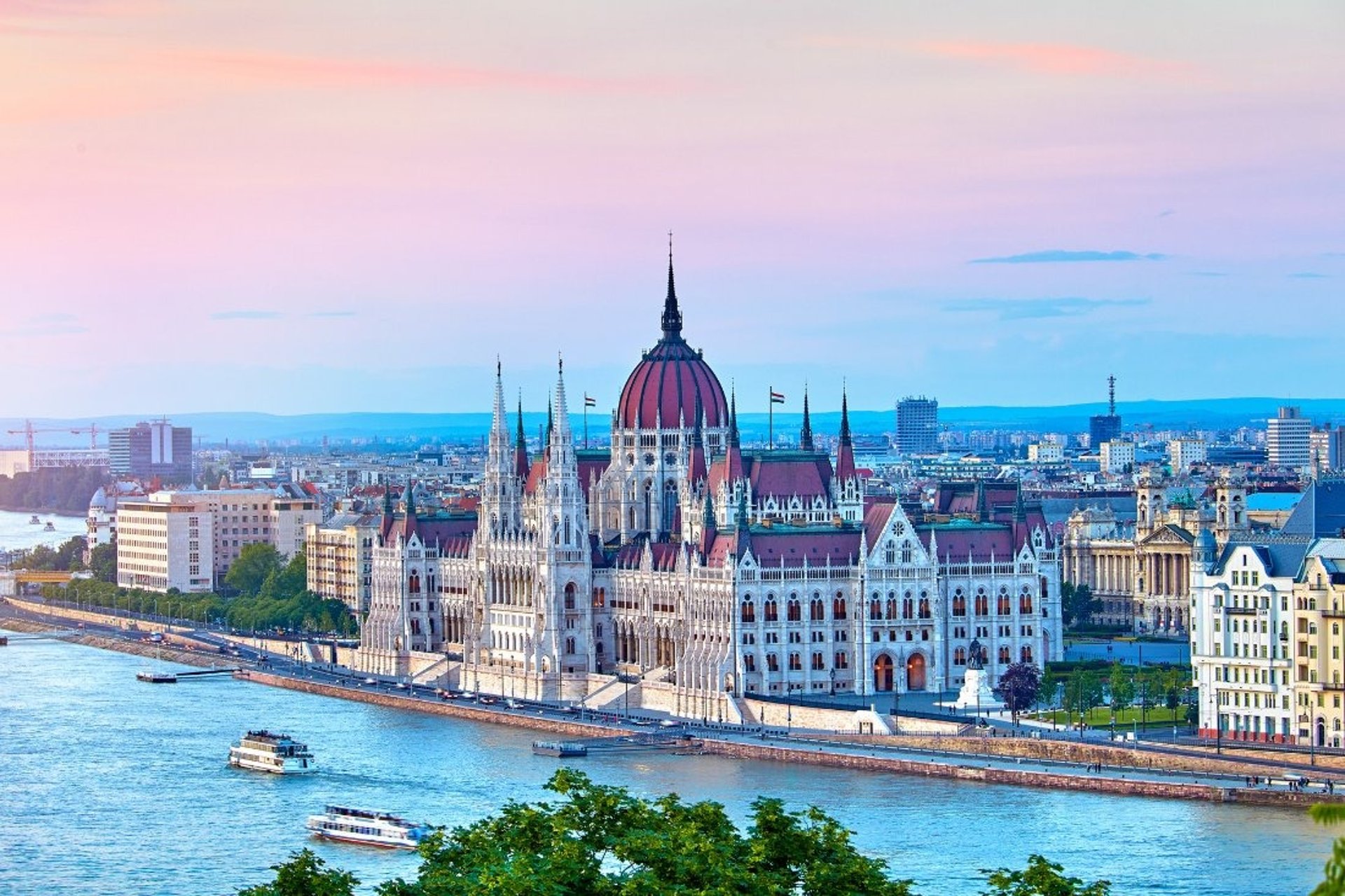
Budapest is effectively two cities - Buda (hilly, historic, residential) and Pest (flat, commercial, cosmopolitan) - connected by the iconic Chain Bridge. On the Buda side: the Castle District (Buda Castle, Fisherman's Bastion, Matthias Church) and the Citadella viewpoint above the Gellert thermal baths. On the Pest side: the neo-Gothic Parliament building (one of the world's most beautiful), the Great Market Hall, the ruin bar district of the 7th district, and the Jewish Quarter with the Great Synagogue (the largest in Europe).
The thermal baths deserve serious time. Szechenyi (in City Park, the grandest) and Gellert (Art Nouveau, in a magnificent Austro-Hungarian spa hotel) are the two essential experiences. Rudas (Ottoman-era, with a rooftop pool overlooking the Danube) is the most atmospheric.
The Danube Bend
The Danube makes a dramatic curve north of Budapest, creating some of Hungary's most beautiful river scenery. Three towns anchor the bend: Szentendre (an artists' town with Serbian Orthodox churches and excellent galleries, 40 minutes from Budapest), Visegrad (a medieval hilltop citadel with panoramic river views), and Esztergom (Hungary's religious capital, with a cathedral visible for miles across the plain).
Eger & the Northern Highlands
Eger is one of Hungary's most beautiful provincial cities - a Baroque old town, a castle that famously held off Ottoman invasion, thermal baths, and the Valley of the Beautiful Women (Szepasszonyvolgy), where wine cellars are carved into the hillside and you drink Egri Bikaver directly from the barrel with the winemaker. A genuinely extraordinary afternoon.
Tokaj Wine Region
Tokaj is UNESCO-listed and justifiably famous - the Tokaji Aszu dessert wine, made from botrytis-affected grapes, was served at the courts of Louis XIV and Peter the Great. The region produces both the legendary sweet wines and increasingly exciting dry whites. Small cellars, ancient underground ageing tunnels, and vine-covered hillsides above the Tisza river make it a destination in its own right.
Explore by City

Budapest for imperial grandeur and all-night energy. Eger for baroque charm and Bull's Blood wine. Pécs for a multicultural southern city full of surprises. Debrecen for Hungary beyond the capital. Győr for a perfectly preserved baroque old town most visitors never find.
Getting Around Hungary
Budapest has an excellent metro, tram, and bus network. Day trips to the Danube Bend are easy by regional train (Esztergom) or the HEV suburban rail (Szentendre). Eger is 2 hours by train from Budapest. Tokaj is 2.5 hours - best done as an overnight or combined with Eger. Car hire opens up the Great Hungarian Plain and the Tokaj hillsides considerably.
Top Regions & What to See
Budapest
Budapest is effectively two cities - Buda (hilly, historic, residential) and Pest (flat, commercial, cosmopolitan) - connected by the iconic Chain Bridge. On the Buda side: the Castle District (Buda Castle, Fisherman's Bastion, Matthias Church) and the Citadella viewpoint above the Gellert thermal baths. On the Pest side: the neo-Gothic Parliament building (one of the world's most beautiful), the Great Market Hall, the ruin bar district of the 7th district, and the Jewish Quarter with the Great Synagogue (the largest in Europe).
The thermal baths deserve serious time. Szechenyi (in City Park, the grandest) and Gellert (Art Nouveau, in a magnificent Austro-Hungarian spa hotel) are the two essential experiences. Rudas (Ottoman-era, with a rooftop pool overlooking the Danube) is the most atmospheric.
The Danube Bend
The Danube makes a dramatic curve north of Budapest, creating some of Hungary's most beautiful river scenery. Three towns anchor the bend: Szentendre (an artists' town with Serbian Orthodox churches and excellent galleries, 40 minutes from Budapest), Visegrad (a medieval hilltop citadel with panoramic river views), and Esztergom (Hungary's religious capital, with a cathedral visible for miles across the plain).
Eger & the Northern Highlands
Eger is one of Hungary's most beautiful provincial cities - a Baroque old town, a castle that famously held off Ottoman invasion, thermal baths, and the Valley of the Beautiful Women (Szepasszonyvolgy), where wine cellars are carved into the hillside and you drink Egri Bikaver directly from the barrel with the winemaker. A genuinely extraordinary afternoon.
Tokaj Wine Region
Tokaj is UNESCO-listed and justifiably famous - the Tokaji Aszu dessert wine, made from botrytis-affected grapes, was served at the courts of Louis XIV and Peter the Great. The region produces both the legendary sweet wines and increasingly exciting dry whites. Small cellars, ancient underground ageing tunnels, and vine-covered hillsides above the Tisza river make it a destination in its own right.
Don't Miss
Széchenyi Thermal Baths
Built between 1885 and 1904 in neo-Gothic splendour, the Hungarian Parliament is one of the world's most beautiful government buildings, and the largest in Hungary. Its 96 spires mirror the Danube below at dawn and glow amber at night. Book an interior tour to see the Hungarian Crown Jewels and the grand central staircase.
The Hungarian Parliament
The Ruin Bars of the Jewish Quarter
Budapest sits above a network of over 120 natural hot springs, and the Széchenyi Baths, housed in a magnificent 1913 baroque palace in City Park, are the grandest of them all. Three outdoor pools and 18 indoor pools fill with mineral-rich thermal water year-round. Soaking here in winter, steam rising in the cold air, is one of Budapest's essential experiences.
Szimpla Kert started it all, a bar built inside a crumbling courtyard of mismatched furniture, salvaged art, and fairy lights. Today the Jewish Quarter is home to dozens of ruin bars, each with their own eccentric identity. They're open until dawn, enormously fun, and exist nowhere else on earth quite like this.
Hungary Day Trips & Activities
Hungary is Central Europe's best kept secret - a country with a magnificent capital, one of Europe's greatest thermal bathing cultures, extraordinary food and wine that the world has barely discovered, and a landscape of plains, hills, and river valleys that rewards slow exploration. Budapest routinely surprises travelers who arrive without high expectations and leave ranking it among Europe's great cities.
The country's position at the heart of Europe means it has absorbed influences from east and west across centuries - Ottoman, Habsburg, Magyar, and Slavic - creating a culture that is entirely its own. Budapest is the centerpiece, but the wine country of Eger and Tokaj, the Danube Bend villages, and the thermal spa towns of the Great Hungarian Plain are all worth the journey.
Don't Miss
Széchenyi Thermal Baths
Built between 1885 and 1904 in neo-Gothic splendour, the Hungarian Parliament is one of the world's most beautiful government buildings, and the largest in Hungary. Its 96 spires mirror the Danube below at dawn and glow amber at night. Book an interior tour to see the Hungarian Crown Jewels and the grand central staircase.
The Hungarian Parliament
The Ruin Bars of the Jewish Quarter
Budapest sits above a network of over 120 natural hot springs, and the Széchenyi Baths, housed in a magnificent 1913 baroque palace in City Park, are the grandest of them all. Three outdoor pools and 18 indoor pools fill with mineral-rich thermal water year-round. Soaking here in winter, steam rising in the cold air, is one of Budapest's essential experiences.
Szimpla Kert started it all, a bar built inside a crumbling courtyard of mismatched furniture, salvaged art, and fairy lights. Today the Jewish Quarter is home to dozens of ruin bars, each with their own eccentric identity. They're open until dawn, enormously fun, and exist nowhere else on earth quite like this.
Hungary Day Trips & Activities
Hungary is Central Europe's best kept secret - a country with a magnificent capital, one of Europe's greatest thermal bathing cultures, extraordinary food and wine that the world has barely discovered, and a landscape of plains, hills, and river valleys that rewards slow exploration. Budapest routinely surprises travelers who arrive without high expectations and leave ranking it among Europe's great cities.
The country's position at the heart of Europe means it has absorbed influences from east and west across centuries - Ottoman, Habsburg, Magyar, and Slavic - creating a culture that is entirely its own. Budapest is the centerpiece, but the wine country of Eger and Tokaj, the Danube Bend villages, and the thermal spa towns of the Great Hungarian Plain are all worth the journey.
Top Reasons to Visit
✔ One of Europe's most visually grand and underrated capital cities, the Danube view alone justifies the trip
✔ Thel spa culture that's been a daily ritual for Budapestians for centuries
✔ A food and wine scene rooted in rich Central European tradition, goulash, lángos, chimney cake, and Tokaj deserve far more international recognition
✔ Budapest by night, one of the most romantic, atmospheric, and alive river cities in the world
✔ Budapest: Gulyas (goulash - the real thing is a clear beef and paprika soup, not a stew), Lango's (deep-fried flatbread with sour cream and cheese - the essential street food), Halasz (spicy fisherman's soup from the Danube), dobos torte (layered sponge cake with caramel)
✔ Eger region: Mangalia pork (a fatty, flavorful native pig breed), stuffed peppers, lecso (Hungarian ratatouille with paprika), and local wine straight from the barrel
✔ Tokaj: Furmint grape varieties in both dry and sweet styles - the dry Furmint is one of Central Europe's most underrated white wines
✔ Everywhere: Hungarian paprika is the backbone of the cuisine - sweet, hot, and smoked versions are used with genuine craft. The Great Market Hall in Budapest is the finest place to buy it
What to Eat & Drink
Top Reasons to Visit
✔ One of Europe's most visually grand and underrated capital cities, the Danube view alone justifies the trip
✔ Thel spa culture that's been a daily ritual for Budapestians for centuries
✔ A food and wine scene rooted in rich Central European tradition, goulash, lángos, chimney cake, and Tokaj deserve far more international recognition
✔ Budapest by night, one of the most romantic, atmospheric, and alive river cities in the world