
Greece Day Trips & Activities. Best Island Escapes
Where 3,000 years of history meets the deepest blue sea on earth
Ancient Myths & Island Perfection
TravelWell Guide
Greece Day Trips & Activities. Best Island Escapes
Where 3,000 years of history meets the deepest blue sea on earth
Ancient Myths & Island Perfection
TravelWell Guide
Why Travelers Love It
Greece operates on a different frequency from the rest of Europe. It's older, warmer, slower, in all the best ways. Athens is where Western civilisation was born, and standing beneath the Parthenon, 2,500 years old and still impossibly commanding on its hilltop above the city, that fact stops feeling abstract. Greece's islands, over 6,000 of them, are the great joy of the country: each with its own personality, each worth at least a week. Santorini's volcanic caldera sunsets are among the most photographed moments on earth, and they still manage to exceed every expectation. Mykonos delivers a glamour that's uniquely Greek, windmills, whitewashed lanes, and the best beach clubs in the Mediterranean. Crete is an island unto itself: big enough to feel like a country, with its own ancient civilisation, cuisine, and mountain interior. And away from the famous names, on islands like Naxos, Milos, and Hydra, Greece rewards those who venture further with a beauty and quietude that feels almost private.

🏛 Ancient Ruins 🌅 Volcanic Sunsets
🏝 Island Hopping 🫒 Mediterranean Cuisine
Why Travelers Keep Coming Back to Greece
Greece has the kind of pull that keeps people returning year after year. It's partly the light - that particular clarity of a Greek afternoon that makes everything look like a painting. It's partly the food - simple, ingredient-led, and tied to place in a way that restaurant versions elsewhere never quite capture. And it's partly the feeling of being somewhere that has mattered to the world for thousands of years, and still does.
Best Time to Visit Greece
Spring (May - June)
is the finest window - warm enough to swim, before the summer crush arrives. Hotels and tours are still available without booking months ahead.
Summer (July - August)
is peak season. The Aegean islands are at their most beautiful and most crowded. Santorini and Mykonos in August require patience and early bookings.
Autumn (September - October)
is exceptional. The sea is still warm from summer, the tourist hordes have thinned, and the light is extraordinary. The best time for hiking and history sites.
Winter (November - April)
sees most islands go quiet (many restaurants and hotels close), but Athens is lively year-round. The mountains of Epirus and Macedonia are excellent for winter hiking.
Why Travelers Love It
Greece operates on a different frequency from the rest of Europe. It's older, warmer, slower, in all the best ways. Athens is where Western civilisation was born, and standing beneath the Parthenon, 2,500 years old and still impossibly commanding on its hilltop above the city, that fact stops feeling abstract. Greece's islands, over 6,000 of them, are the great joy of the country: each with its own personality, each worth at least a week. Santorini's volcanic caldera sunsets are among the most photographed moments on earth, and they still manage to exceed every expectation. Mykonos delivers a glamour that's uniquely Greek, windmills, whitewashed lanes, and the best beach clubs in the Mediterranean. Crete is an island unto itself: big enough to feel like a country, with its own ancient civilisation, cuisine, and mountain interior. And away from the famous names, on islands like Naxos, Milos, and Hydra, Greece rewards those who venture further with a beauty and quietude that feels almost private.
Why Travelers Keep Coming Back to Greece
Greece has the kind of pull that keeps people returning year after year. It's partly the light - that particular clarity of a Greek afternoon that makes everything look like a painting. It's partly the food - simple, ingredient-led, and tied to place in a way that restaurant versions elsewhere never quite capture. And it's partly the feeling of being somewhere that has mattered to the world for thousands of years, and still does.
Best Time to Visit Greece
Spring (May - June)
is the finest window - warm enough to swim, before the summer crush arrives. Hotels and tours are still available without booking months ahead.
Summer (July - August)
is peak season. The Aegean islands are at their most beautiful and most crowded. Santorini and Mykonos in August require patience and early bookings.
Autumn (September - October)
is exceptional. The sea is still warm from summer, the tourist hordes have thinned, and the light is extraordinary. The best time for hiking and history sites.
Winter (November - April)
sees most islands go quiet (many restaurants and hotels close), but Athens is lively year-round. The mountains of Epirus and Macedonia are excellent for winter hiking.
Explore by City


Athens for the cradle of civilisation. Santorini for the most iconic sunset on earth. Mykonos for glamour and Mediterranean style. Crete for an island that rewards weeks, not days. Rhodes for a medieval walled city that rivals Dubrovnik.
Top Regions & What to See
Athens & Attica
Athens is more layered than first-time visitors expect. The Acropolis is extraordinary - allow a full morning and arrive early. Beyond it: the Ancient Agora, Hadrian's Arch, the Plaka neighborhood for lunch, and the National Archaeological Museum for depth. Day trips from Athens include the Temple of Poseidon at Sounion, the oracle site at Delphi, and the ancient citadel of Mycenae.
The Cyclades
The classic Greek island image - blue-domed churches, whitewashed sugar-cube houses, and turquoise water. Santorini is the most dramatic; Mykonos the most cosmopolitan. But the real jewels are the quieter islands: Naxos (the largest, with a real local life), Milos (extraordinary beaches and volcanic landscapes), and tiny Folegandros (no cruise ships, no rush).
Crete
Greece's largest island deserves a week minimum. The Palace of Knossos (Minoan civilization), the Samaria Gorge (one of Europe's great hikes), the old Venetian harbor of Chania, and beaches that range from the famous (Elafonisi, Balos) to the blissfully remote - Crete is an entire destination in its own right.
The Ionian Islands
Greener and more Venetian in character than the Aegean islands. Corfu is the most famous - its old town is a UNESCO World Heritage Site. Lefkada has some of the most beautiful beaches in Greece. Kefalonia and Zakynthos offer dramatic scenery and a more relaxed atmosphere.
Northern Greece & the Mainland
Thessaloniki is Greece's second city and arguably its most underrated - a university city with Byzantine churches, an extraordinary food market, and a more local, less tourist-driven atmosphere than Athens. The Meteora monasteries (perched on vertical rock pillars above the plain) are among the most surreal and beautiful sights in all of Europe.
Getting Around Greece
Athens has a good metro system. For the islands, ferries are the primary mode of transport - book ahead in summer, especially for popular routes. High-season island-hopping requires planning: ferries between Piraeus (Athens' port) and the Cyclades run frequently, but schedules change. Domestic flights connect Athens to major islands year-round. On larger islands, car hire is the best way to explore properly.
Explore by City

Athens for the cradle of civilisation. Santorini for the most iconic sunset on earth. Mykonos for glamour and Mediterranean style. Crete for an island that rewards weeks, not days. Rhodes for a medieval walled city that rivals Dubrovnik.
Top Regions & What to See
Athens & Attica
Athens is more layered than first-time visitors expect. The Acropolis is extraordinary - allow a full morning and arrive early. Beyond it: the Ancient Agora, Hadrian's Arch, the Plaka neighborhood for lunch, and the National Archaeological Museum for depth. Day trips from Athens include the Temple of Poseidon at Sounion, the oracle site at Delphi, and the ancient citadel of Mycenae.
The Cyclades
The classic Greek island image - blue-domed churches, whitewashed sugar-cube houses, and turquoise water. Santorini is the most dramatic; Mykonos the most cosmopolitan. But the real jewels are the quieter islands: Naxos (the largest, with a real local life), Milos (extraordinary beaches and volcanic landscapes), and tiny Folegandros (no cruise ships, no rush).
Crete
Greece's largest island deserves a week minimum. The Palace of Knossos (Minoan civilization), the Samaria Gorge (one of Europe's great hikes), the old Venetian harbor of Chania, and beaches that range from the famous (Elafonisi, Balos) to the blissfully remote - Crete is an entire destination in its own right.
The Ionian Islands
Greener and more Venetian in character than the Aegean islands. Corfu is the most famous - its old town is a UNESCO World Heritage Site. Lefkada has some of the most beautiful beaches in Greece. Kefalonia and Zakynthos offer dramatic scenery and a more relaxed atmosphere.
Northern Greece & the Mainland
Thessaloniki is Greece's second city and arguably its most underrated - a university city with Byzantine churches, an extraordinary food market, and a more local, less tourist-driven atmosphere than Athens. The Meteora monasteries (perched on vertical rock pillars above the plain) are among the most surreal and beautiful sights in all of Europe.
Getting Around Greece
Athens has a good metro system. For the islands, ferries are the primary mode of transport - book ahead in summer, especially for popular routes. High-season island-hopping requires planning: ferries between Piraeus (Athens' port) and the Cyclades run frequently, but schedules change. Domestic flights connect Athens to major islands year-round. On larger islands, car hire is the best way to explore properly.
Don't Miss
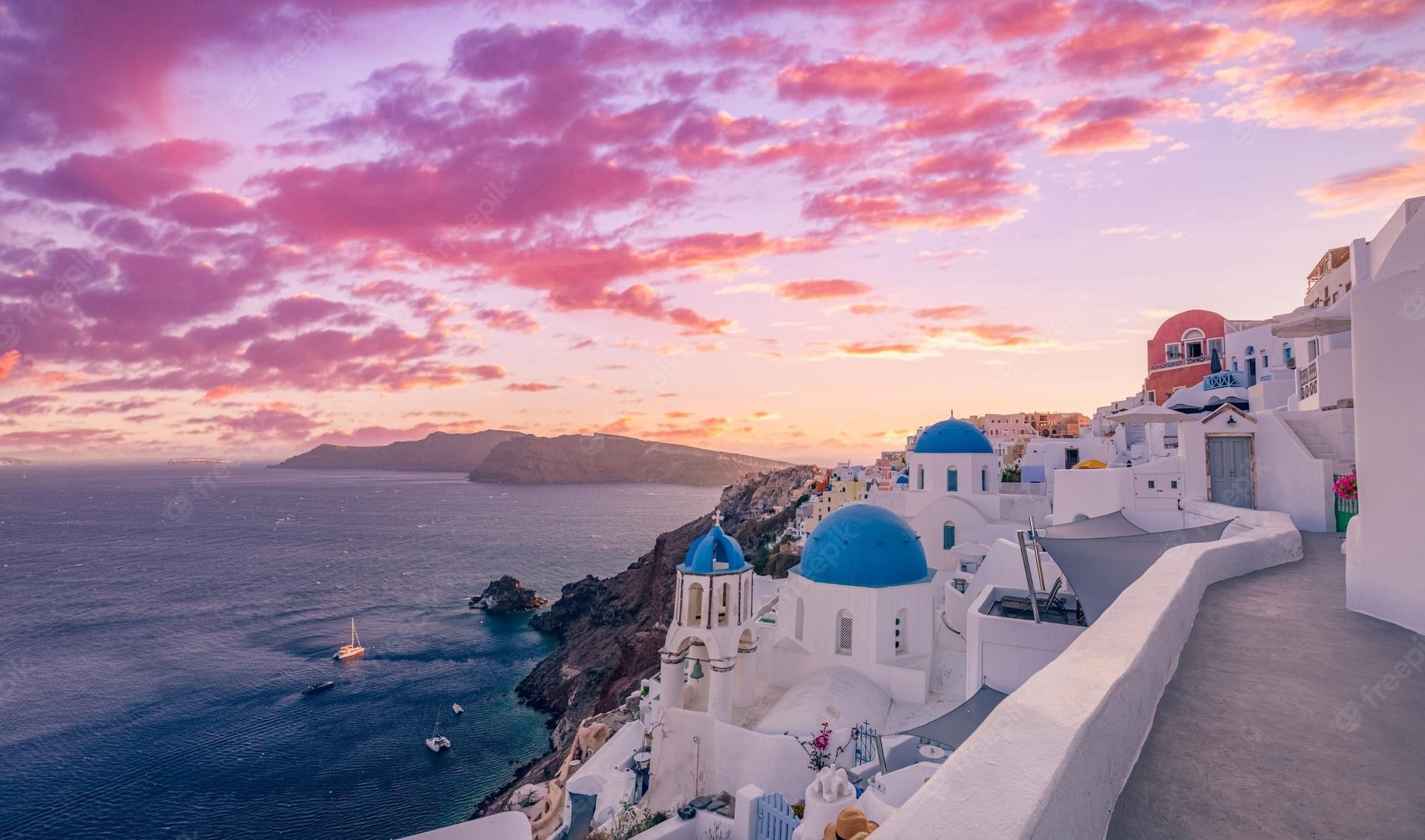
Santorini at Sunset
No amount of preparation prepares you for the Acropolis in person. The Parthenon, built in 447 BC and still standing in extraordinary condition, commands the Athens skyline from every angle, and the view from the top, across the city to the sea, is one of the great urban panoramas in the world. Visit at opening time (8am) to have it nearly to yourself.
The Acropolis, Athens
Navagio Beach, Zakynthos
Oia's sunset is one of those travel experiences that lives up to the hype, and that's a rare thing. The caldera view, with the sun dropping behind the volcanic rim while the white-domed village glows pink and gold, is genuinely one of the world's most beautiful moments. Stay in a cave hotel carved into the cliff face for the full effect.
Enclosed by towering white limestone cliffs, accessible only by boat, and home to a rusting shipwreck on its white sand shore, Navagio (Shipwreck Beach) is one of the most dramatic and beautiful beaches on earth. The water is an electric turquoise that seems almost unreal. See it from the clifftop first, then descend by boat.
Greece Day Trips & Activities
Greece is one of those destinations that manages to be exactly what you hope it will be - ancient ruins rising from golden hills, whitewashed villages tumbling toward impossibly blue seas, and a warmth of hospitality that feels entirely genuine. It's a country that has shaped Western civilization and wears that history lightly, embedding it into daily life rather than keeping it behind museum glass.
But Greece is also dramatically varied. The mainland offers mountainous landscapes, Byzantine monasteries, and cities with serious contemporary energy. The islands - over 200 inhabited - range from party destinations to places where the boats come twice a week and the pace has barely changed in a century. Choosing your Greece is part of the adventure.
Don't Miss
Santorini at Sunset
No amount of preparation prepares you for the Acropolis in person. The Parthenon, built in 447 BC and still standing in extraordinary condition, commands the Athens skyline from every angle, and the view from the top, across the city to the sea, is one of the great urban panoramas in the world. Visit at opening time (8am) to have it nearly to yourself.
The Acropolis, Athens
Navagio Beach, Zakynthos
Oia's sunset is one of those travel experiences that lives up to the hype, and that's a rare thing. The caldera view, with the sun dropping behind the volcanic rim while the white-domed village glows pink and gold, is genuinely one of the world's most beautiful moments. Stay in a cave hotel carved into the cliff face for the full effect.
Enclosed by towering white limestone cliffs, accessible only by boat, and home to a rusting shipwreck on its white sand shore, Navagio (Shipwreck Beach) is one of the most dramatic and beautiful beaches on earth. The water is an electric turquoise that seems almost unreal. See it from the clifftop first, then descend by boat.
Greece Day Trips & Activities
Greece is one of those destinations that manages to be exactly what you hope it will be - ancient ruins rising from golden hills, whitewashed villages tumbling toward impossibly blue seas, and a warmth of hospitality that feels entirely genuine. It's a country that has shaped Western civilization and wears that history lightly, embedding it into daily life rather than keeping it behind museum glass.
But Greece is also dramatically varied. The mainland offers mountainous landscapes, Byzantine monasteries, and cities with serious contemporary energy. The islands - over 200 inhabited - range from party destinations to places where the boats come twice a week and the pace has barely changed in a century. Choosing your Greece is part of the adventure.
Top Reasons to Visit
✔ The cradle of Western civilisation, history is not in a museum here, it's standing in the open air around every corner
✔ Santorini sunsets, among the most photographed and most genuinely beautiful moments in travel
✔ Over 6,000 islands to explore, each with its own distinct character, culture, and colour of sea
✔ Greek hospitality, food, and outdoor living, a way of life, not a performance, built on olive oil, fresh fish, and unhurried meals that last all afternoon
✔ Athens: souvlaki (pork skewers in pita), spanakopita (spinach and feta pie), loukoumades (honey-drenched doughnuts)
✔ Santorini: local fava (yellow split peas), white eggplant, cherry tomatoes, and Assyrtiko wine - crisp, mineral, and unlike any white wine you've had before
✔ Crete: dakos (barley rusk with tomato and cheese), lamb with herbs, and extraordinarily good olive oil
✔ Thessaloniki: bougatsa (custard or cheese pastry), spanakopita, and the best street food in Greece
✔ Everywhere: Greek salad made properly (no lettuce), tzatziki, grilled octopus by the water, and house wine from the barrel
✔ Ouzo is the traditional anise spirit - best taken slowly, with meze, looking at the sea.
What to Eat & Drink
Top Reasons to Visit
✔ The cradle of Western civilisation, history is not in a museum here, it's standing in the open air around every corner
✔ Santorini sunsets, among the most photographed and most genuinely beautiful moments in travel
✔ Over 6,000 islands to explore, each with its own distinct character, culture, and colour of sea
✔ Greek hospitality, food, and outdoor living, a way of life, not a performance, built on olive oil, fresh fish, and unhurried meals that last all afternoon