
Scotland Best Day Trips & Activities. Explore Epic Adventures
Highland landscapes, ancient castles & a whisky culture unlike anything else
Wild, Ancient & Utterly Captivating
TravelWell Guide
Scotland Best Day Trips & Activities. Explore Epic Adventures
Highland landscapes, ancient castles & a whisky culture unlike anything else
Wild, Ancient & Utterly Captivating
TravelWell Guide
Why Travelers Love It
Scotland does something very few destinations can: it makes you feel genuinely small in the best possible way. The Highlands are one of the last truly wild places in Europe, ancient mountains sculpted by glaciers, vast empty glens, peat-dark lochs, and skies that change every twenty minutes. Glencoe at dawn, when mist fills the valley between the dark mountains, is one of the most dramatic landscapes on earth. The Isle of Skye feels like a different planet: black volcanic peaks, sea stacks rising from the Atlantic, waterfalls cascading into hidden fairy pools. Edinburgh, by contrast, is one of the great European capitals, compact, beautiful, layered with history from the castle rock down through the medieval Old Town to the Georgian New Town. And then there is whisky, not just a drink here but a living craft tradition, with over 130 active distilleries producing single malts that range from delicate coastal expressions to intensely smoky island whiskies. Scotland rewards the slow traveller above all others.

🏔 Highland Drama 🏰 Ancient Castles
🥃 Single Malt Whisky 🎶 Celtic Culture
Why Travelers Keep Coming Back to Scotland
Scotland gets into people. The landscape is partly responsible - there is nothing quite like standing on a Highland ridge with the glens spreading below, or watching the Atlantic waves come in against the black basalt cliffs of Staffa. But Scotland's pull is also cultural: the warmth and wit of the people, the depth of the whisky culture, the extraordinary concentration of castles, and the music that appears spontaneously in pub sessions on weekday evenings. It's a country that feels alive in a particular way.
Best Time to Visit Scotland
Spring (May - June)
is one of the finest windows - long days (the northern latitude means extraordinarily long evenings in June), wildflowers across the Highlands, and midges not yet at their worst.
Summer (July - August)
brings the Edinburgh Festival (the world's largest arts festival, running through August) and the best weather for island exploration. Midges (tiny biting insects) are present in the Highlands from late June - carry repellent.
Autumn (September, October)
is outstanding - heather on the hillsides is purple in September, stag rutting season adds drama to the glens, and the light is extraordinary. One of Scotland's best-kept seasonal secrets.
Winter (November - March)
is wild and atmospheric - Edinburgh at Christmas and Hogmanay (New Year) is spectacular. The mountains are snowbound and dramatic. Short days but remarkable quality of light.
Why Travelers Love It
Scotland does something very few destinations can: it makes you feel genuinely small in the best possible way. The Highlands are one of the last truly wild places in Europe, ancient mountains sculpted by glaciers, vast empty glens, peat-dark lochs, and skies that change every twenty minutes. Glencoe at dawn, when mist fills the valley between the dark mountains, is one of the most dramatic landscapes on earth. The Isle of Skye feels like a different planet: black volcanic peaks, sea stacks rising from the Atlantic, waterfalls cascading into hidden fairy pools. Edinburgh, by contrast, is one of the great European capitals, compact, beautiful, layered with history from the castle rock down through the medieval Old Town to the Georgian New Town. And then there is whisky, not just a drink here but a living craft tradition, with over 130 active distilleries producing single malts that range from delicate coastal expressions to intensely smoky island whiskies. Scotland rewards the slow traveller above all others.
Why Travelers Keep Coming Back to Scotland
Scotland gets into people. The landscape is partly responsible - there is nothing quite like standing on a Highland ridge with the glens spreading below, or watching the Atlantic waves come in against the black basalt cliffs of Staffa. But Scotland's pull is also cultural: the warmth and wit of the people, the depth of the whisky culture, the extraordinary concentration of castles, and the music that appears spontaneously in pub sessions on weekday evenings. It's a country that feels alive in a particular way.
Best Time to Visit Scotland
Spring (May - June)
is one of the finest windows - long days (the northern latitude means extraordinarily long evenings in June), wildflowers across the Highlands, and midges not yet at their worst.
Summer (July - August)
brings the Edinburgh Festival (the world's largest arts festival, running through August) and the best weather for island exploration. Midges (tiny biting insects) are present in the Highlands from late June - carry repellent.
Autumn (September, October)
is outstanding - heather on the hillsides is purple in September, stag rutting season adds drama to the glens, and the light is extraordinary. One of Scotland's best-kept seasonal secrets.
Winter (November - March)
is wild and atmospheric - Edinburgh at Christmas and Hogmanay (New Year) is spectacular. The mountains are snowbound and dramatic. Short days but remarkable quality of light.
Winter (November - March)
is wild and atmospheric - Edinburgh at Christmas and Hogmanay (New Year) is spectacular. The mountains are snowbound and dramatic. Short days but remarkable quality of light.
Explore by City


Edinburgh for a capital city of extraordinary drama and depth. Glasgow for culture, music, and one of Britain's best restaurant scenes. Inverness as your gateway to the Highlands and Loch Ness. Isle of Skye for landscapes that belong in a fantasy novel. St Andrews for golf's spiritual home and a beautiful coastal university town.
Getting Around Scotland
Edinburgh is connected to all major UK cities by rail and air. The ScotRail network covers the main Highland routes - the Fort William Sleeper from London, the Kyle of Lochalsh line, and the Caledonian Sleeper routes are among the world's great train journeys. For the islands, CalMac ferries serve most west coast islands. A car is essential for exploring the Highlands, Speyside, and the quieter glens properly - and the driving is extraordinary.
Top Regions & What to See
Edinburgh
Edinburgh is among the most beautiful capital cities in Europe. The Old Town climbs from Holyrood Palace up the Royal Mile to Edinburgh Castle, all volcanic crags and medieval tenements. The New Town (Georgian, elegant, UNESCO-listed) sits beside it. Arthur's Seat (an ancient volcano in the city) offers a 45-minute walk to panoramic views. Beyond the sights: the Writers' Museum (Burns, Scott, Stevenson), the Scottish National Gallery (free entry, world-class collection), and the bar and restaurant scene of the Grassmarket and Leith.
The Scottish Highlands & Glencoe
The Highlands is the landscape most associated with Scotland - vast, empty, and humbling. Glencoe is the most dramatic single location: a U-shaped glacial valley of towering ridges with a history of massacre and extraordinary walking. The road north through Rannoch Moor to Fort William and beyond is one of the great drives in Europe. Ben Nevis (1,345m, the UK's highest peak) is a serious but achievable full-day hike from Fort William.
The Isle of Skye
Skye is Scotland's most visited island - justifiably. The Cuillin ridge (the most technically challenging mountains in the UK), the Fairy Pools (crystalline waterfalls in a glacial bowl), the Old Man of Storr (a dramatic basalt pinnacle with views across the Sound of Raasay), and the Quiraing (a landslip plateau of towers and pinnacles) are all extraordinary. Portree is the charming main town. Arrive early at major viewpoints in summer - the island is popular and the car parks fill.
Speyside & the Whisky Trail
The valley of the River Spey in Moray produces more Scotch whisky than anywhere else in the world - Glenfiddich, Macallan, Glenlivet, and dozens of others are all based here. The Malt Whisky Trail connects the major distilleries, most of which offer tours and tastings. Craigellachie and Dufftown are the best bases.
Orkney & the Northern Isles
Orkney sits off the north coast and feels genuinely apart from the rest of Scotland. It has one of the highest concentrations of Neolithic monuments anywhere on earth - the Ring of Brodgar, Skara Brae (a 5,000-year-old village preserved in sand), and Maeshowe (a chambered tomb aligned with the winter solstice). The landscape is bare and windswept and the quality of light is extraordinary.
Explore by City

Edinburgh for a capital city of extraordinary drama and depth. Glasgow for culture, music, and one of Britain's best restaurant scenes. Inverness as your gateway to the Highlands and Loch Ness. Isle of Skye for landscapes that belong in a fantasy novel. St Andrews for golf's spiritual home and a beautiful coastal university town.
Getting Around Scotland
Edinburgh is connected to all major UK cities by rail and air. The ScotRail network covers the main Highland routes - the Fort William Sleeper from London, the Kyle of Lochalsh line, and the Caledonian Sleeper routes are among the world's great train journeys. For the islands, CalMac ferries serve most west coast islands. A car is essential for exploring the Highlands, Speyside, and the quieter glens properly - and the driving is extraordinary.
Top Regions & What to See
Edinburgh
Edinburgh is among the most beautiful capital cities in Europe. The Old Town climbs from Holyrood Palace up the Royal Mile to Edinburgh Castle, all volcanic crags and medieval tenements. The New Town (Georgian, elegant, UNESCO-listed) sits beside it. Arthur's Seat (an ancient volcano in the city) offers a 45-minute walk to panoramic views. Beyond the sights: the Writers' Museum (Burns, Scott, Stevenson), the Scottish National Gallery (free entry, world-class collection), and the bar and restaurant scene of the Grassmarket and Leith.
The Scottish Highlands & Glencoe
The Highlands is the landscape most associated with Scotland - vast, empty, and humbling. Glencoe is the most dramatic single location: a U-shaped glacial valley of towering ridges with a history of massacre and extraordinary walking. The road north through Rannoch Moor to Fort William and beyond is one of the great drives in Europe. Ben Nevis (1,345m, the UK's highest peak) is a serious but achievable full-day hike from Fort William.
The Isle of Skye
Skye is Scotland's most visited island - justifiably. The Cuillin ridge (the most technically challenging mountains in the UK), the Fairy Pools (crystalline waterfalls in a glacial bowl), the Old Man of Storr (a dramatic basalt pinnacle with views across the Sound of Raasay), and the Quiraing (a landslip plateau of towers and pinnacles) are all extraordinary. Portree is the charming main town. Arrive early at major viewpoints in summer - the island is popular and the car parks fill.
Speyside & the Whisky Trail
The valley of the River Spey in Moray produces more Scotch whisky than anywhere else in the world - Glenfiddich, Macallan, Glenlivet, and dozens of others are all based here. The Malt Whisky Trail connects the major distilleries, most of which offer tours and tastings. Craigellachie and Dufftown are the best bases.
Orkney & the Northern Isles
Orkney sits off the north coast and feels genuinely apart from the rest of Scotland. It has one of the highest concentrations of Neolithic monuments anywhere on earth - the Ring of Brodgar, Skara Brae (a 5,000-year-old village preserved in sand), and Maeshowe (a chambered tomb aligned with the winter solstice). The landscape is bare and windswept and the quality of light is extraordinary.
Don't Miss
Edinburgh Castle & the Royal Mile
Skye is the crown jewel of the Scottish Highlands, a dramatic island of black Cuillin peaks, coral beaches, sea stacks, and fairy pools (natural turquoise swimming holes at the base of waterfalls). The Quiraing, the Storr, and Neist Point lighthouse are among the most photographed landscapes in the British Isles, and in person, even more so.
Isle of Skye
A Highland Whisky Distillery
The Speyside region alone holds over 50 distilleries within a few miles of each other, the greatest concentration of Scotch whisky production on earth. Glenfiddich, Macallan, and Glenlivet all offer tours and tastings, but smaller independent distilleries like Cragganmore and Benromach offer a more intimate view of a craft that takes at least 12 years to reach its peak.
Scotland Day Trips & Activities
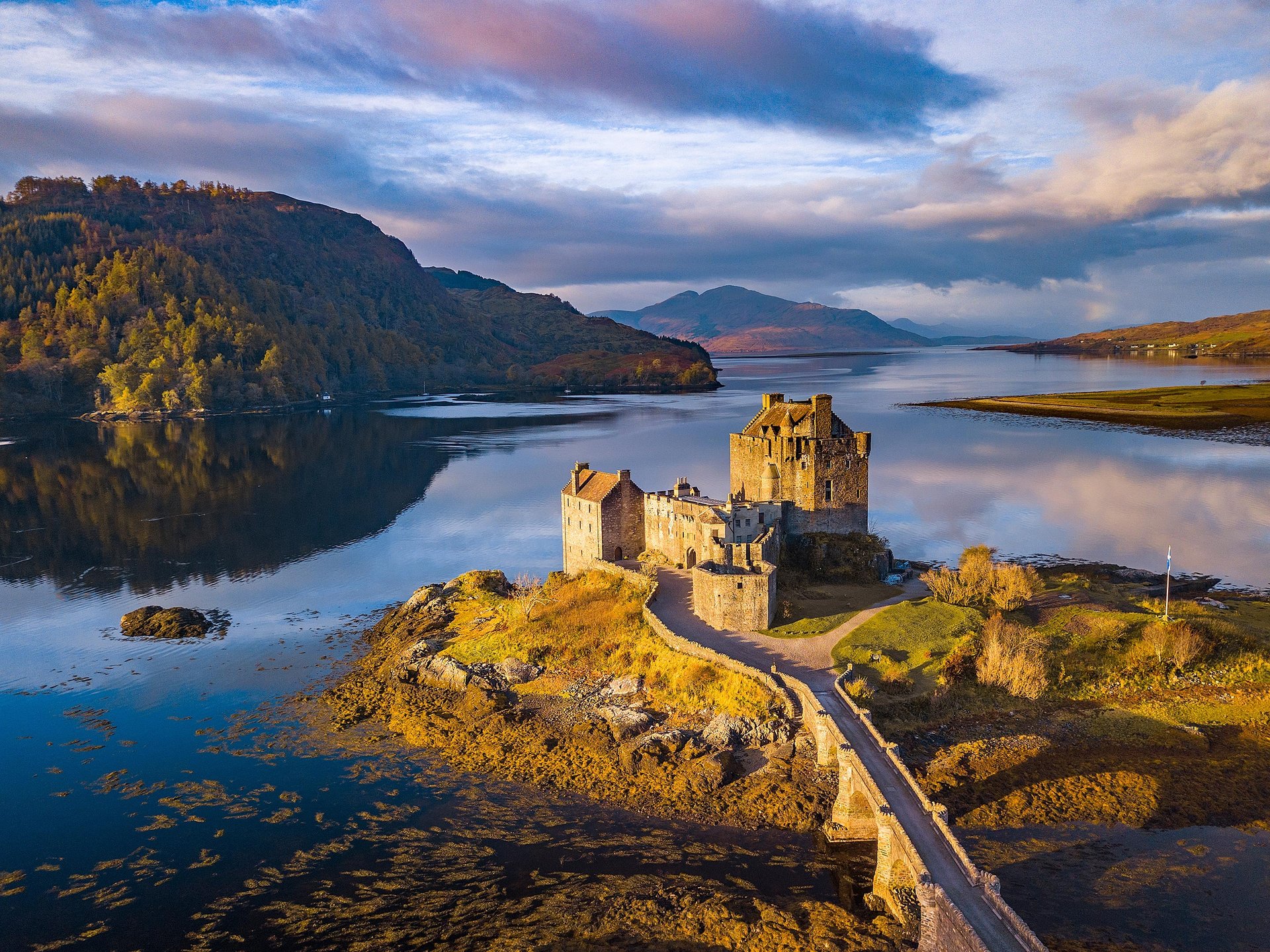
Scotland is one of Europe's most dramatic and emotionally resonant travel destinations - a country of extraordinary landscapes, deep history, and a cultural identity so distinct and so fiercely maintained that a few days here feels like visiting somewhere genuinely different from the rest of the world. The Highland light, the lochs, the whisky, the castles rising from impossible hillsides - Scotland delivers on its mythology, and then some.
But Scotland also surprises. Edinburgh is one of Europe's most sophisticated and beautiful cities. Glasgow has one of the UK's finest contemporary art and music scenes. The Borders and Dumfries & Galloway are gentle, literary, and largely undiscovered. And the outer islands - Skye, the Outer Hebrides, Orkney - are as remote, wild, and otherworldly as anything in northern Europe.
Don't Miss
Edinburgh Castle & the Royal Mile
Skye is the crown jewel of the Scottish Highlands, a dramatic island of black Cuillin peaks, coral beaches, sea stacks, and fairy pools (natural turquoise swimming holes at the base of waterfalls). The Quiraing, the Storr, and Neist Point lighthouse are among the most photographed landscapes in the British Isles, and in person, even more so.
Isle of Skye
A Highland Whisky Distillery
The Speyside region alone holds over 50 distilleries within a few miles of each other, the greatest concentration of Scotch whisky production on earth. Glenfiddich, Macallan, and Glenlivet all offer tours and tastings, but smaller independent distilleries like Cragganmore and Benromach offer a more intimate view of a craft that takes at least 12 years to reach its peak.
Scotland Day Trips & Activities
Scotland is one of Europe's most dramatic and emotionally resonant travel destinations - a country of extraordinary landscapes, deep history, and a cultural identity so distinct and so fiercely maintained that a few days here feels like visiting somewhere genuinely different from the rest of the world. The Highland light, the lochs, the whisky, the castles rising from impossible hillsides - Scotland delivers on its mythology, and then some.
But Scotland also surprises. Edinburgh is one of Europe's most sophisticated and beautiful cities. Glasgow has one of the UK's finest contemporary art and music scenes. The Borders and Dumfries & Galloway are gentle, literary, and largely undiscovered. And the outer islands - Skye, the Outer Hebrides, Orkney - are as remote, wild, and otherworldly as anything in northern Europe.
Top Reasons to Visit
✔ Highland landscapes that feel genuinely untouched, ancient, and overwhelming in their scale and beauty
✔ Edinburgh, one of Europe's most dramatic, liveable, and historically layered capital cities
✔ A whisky tradition refined over centuries across 130+ active distilleries, each producing something distinct
✔ Celtic culture, music, myth, and storytelling, that runs far deeper than any tourist trail and rewards genuine curiosity
✔ Edinburgh: cullen skink (smoked haddock and potato soup one of Scotland's great dishes), haggis with neeps and tatties (turnip and mashed potato), venison from the Highlands, and a rapidly evolving restaurant scene in Leith
✔ The Highlands: fresh langoustines and west coast seafood, smoked salmon from Highland smokeries, game (venison, grouse, pheasant) in season
✔ Everywhere: Scottish breakfast (Lorne sausage, black pudding, potato scones, and the square-shaped square sausage - different from the English version in every important way)
✔ Whisky: start with a Speyside (approachable, fruity - Glenfiddich 12 is the benchmark), work toward an Islay (Laphroaig, Ardbeg - peaty, maritime, polarising and brilliant). Always neat or with a small amount of water; never ice in a single malt
✔ Real ale: Scottish ales tend toward malt and warmth rather than the hop-forward styles of England - Belhaven, Traquair, and the increasingly excellent craft breweries of Edinburgh and Glasgow
What to Eat & Drink
Top Reasons to Visit
✔ Highland landscapes that feel genuinely untouched, ancient, and overwhelming in their scale and beauty
✔ Edinburgh, one of Europe's most dramatic, liveable, and historically layered capital cities
✔ A whisky tradition refined over centuries across 130+ active distilleries, each producing something distinct
✔ Celtic culture, music, myth, and storytelling, that runs far deeper than any tourist trail and rewards genuine curiosity